
Why Wall Street Is Raising Uranium Price Forecasts to $140
Big Tech's appetite for AI compute is driving yellowcake contract prices to 18-year highs, turning nuclear energy into Silicon Valley's ultimate baseload power play.
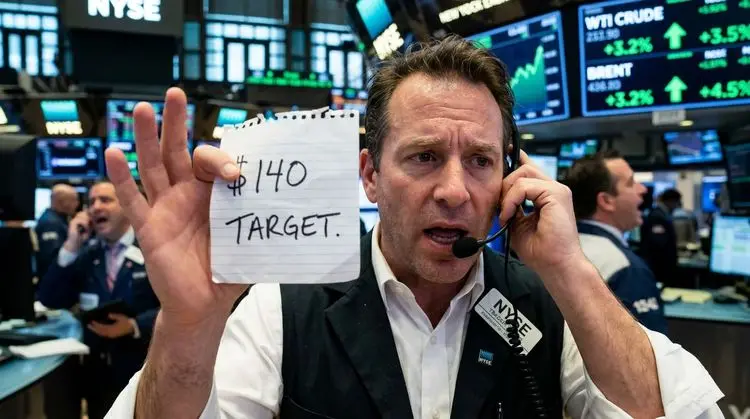
Silicon Valley’s relentless appetite for artificial intelligence compute has triggered an unexpected feeding frenzy in one of the quietest corners of the commodities market: raw uranium.
Long-term yellowcake contract prices have surged to their highest levels in at least 18 years, driven by tech giants hunting for round-the-clock clean energy. With spot prices for U3O8 yellowcake floating near $90 a pound, nearly five times higher than their post-Fukushima lows, the nuclear market is undergoing a dramatic transformation that analysts say is only just beginning.
The primary catalyst stems from hyperscalers realizing that intermittent renewables cannot reliably fuel massive data center expansions without overtaxing local power grids. Just recently, Alphabet Inc. (NASDAQ: GOOGL) inked a deal with Finnish utility Fortum Oyj (HEL: FORTUM) to draw power for its data centers from the Loviisa nuclear plant, extending the facility's operational life. Financial institutions are rapidly revising their models to reflect this structural shift. Analysts at Jefferies Financial Group (NYSE: JEF) raised their long-term uranium price target by 36% to $95 a pound, while strategists at Citi (NYSE: C) suggest spot prices could rocket toward $140 a pound by late 2027.
While producers welcome the momentum, physical uranium supply remains severely constrained. Kazatomprom (LSE: KAP) Chief Executive Meirzhan Yussupov warned that the era of cheap uranium is fading away as production costs climb industrywide.
Meanwhile, Cameco Corporation (NYSE: CCJ) Chief Executive Tim Gitzel noted that the current market environment is the strongest he has witnessed in four decades, powered by reactor restarts and new builds dedicated to data center workloads.
Even mining giant BHP Group (NYSE: BHP) has acknowledged the sector's appeal, though Chief Executive Brandon Craig noted that uranium currently remains a byproduct of their primary copper operations. Market tracking firm UxC and asset manager Sprott Inc. (NYSE: SII) both point out that structural supply deficits are worsening, as utility demand significantly outpaces output.
Despite the bullish outlook supported by analysts at UBS Group AG (NYSE: UBS), near-term volatility persists. Slower-than-expected Western reactor builds, potential new supply from emerging mining projects over the next five years, and public backlash over data center power draw could moderate growth. Nevertheless, with leaders at Constellation Energy Corp (NASDAQ: CEG) pushing to co-locate digital infrastructure directly beside reactors and producers like Uranium Energy Corp (NYSE American: UEC) expanding output, the nuclear renaissance has found its ultimate backer in Big Tech.
Sources
- The Wall Street Journal, "Data Centers Light Fire Under Uranium Prices" by Rhiannon Hoyle (Sept. 10, 2026).
- Market forecasts and analytical commentary provided by UxC, UBS Group AG (NYSE: UBS), Citigroup Inc. (NYSE: C), Jefferies Financial Group Inc. (NYSE: JEF), and Sprott Inc. (NYSE: SII).
- Executive statements from Alphabet Inc. (NASDAQ: GOOGL), Fortum Oyj (HEL: FORTUM), Cameco Corporation (NYSE: CCJ), Kazatomprom (LSE: KAP), BHP Group (NYSE: BHP), Constellation Energy Corp (NASDAQ: CEG), Uranium Energy Corp (NYSE American: UEC), and OpenAI.
Disclaimer
Neither the author of this article nor JuniorStocks.com holds equity, stock options, or any other financial positions in any of the companies mentioned in this publication. This content is published by JuniorStocks.com strictly for informational purposes, was prepared independently without company compensation, and utilized AI assistance for text editing, formatting, and generating accompanying media. While uranium and nuclear power represent a compelling frontier in fueling the growth of artificial intelligence and clean energy infrastructure, this article does not constitute investment or financial advice. Investors are strongly advised to conduct their own thorough, independent due diligence and consult with a qualified financial professional before making any investment decisions.