
Saudi Arabia Unveils 110-Million-Tonne Rare Earth and Uranium Discovery
Saudi Arabia identifies a 110-million-tonne heavy rare earth and uranium deposit at Jabal Sayid, signaling a major strategic pivot toward critical mineral refining and nuclear energy independence.
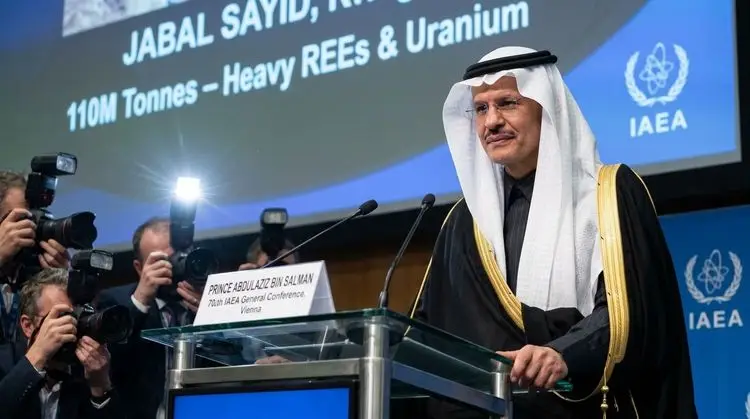
Saudi Arabia just dropped a 110-million-tonne reminder that oil isn't the only strategic commodity buried beneath its desert sands.
Speaking at the International Atomic Energy Agency’s 70th General Conference in Vienna, Saudi Energy Minister Prince Abdulaziz bin Salman revealed that geological exploration at the Jabal Sayid project in the Medina region has uncovered an estimated 110 million tonnes of ore containing high concentrations of heavy rare earth elements and promising deposits of uranium.
The announcement places the site among the world's most notable heavy rare earth developments, giving Riyadh fresh momentum as it attempts to diversify its domestic energy matrix away from crude oil and natural gas. Saudi leadership isn't interested in simply digging raw rock out of the ground to ship elsewhere. Prince Abdulaziz emphasized that the Kingdom's strategy focuses on building an integrated industrial value chain spanning processing, separation, and refining to retain maximum economic value domestically.
To accelerate those high-tech refining capabilities, state-owned mining titan Ma'aden (TADAWUL: 1211) has partnered with U.S.-based critical minerals specialist MP Materials (NYSE: MP) to develop downstream separation infrastructure tailored for heavy rare earths. On the nuclear front, Riyadh has been collaborating with French nuclear fuel leader Orano to explore extracting uranium as a byproduct of domestic phosphate fertilizer production in the northern region. Technical feasibility studies indicate that byproduct recovery from existing fertilizer operations could yield between 447 and 596 tonnes of natural uranium annually, giving Saudi Arabia an immediate processing option while hard-rock mining assets are developed.
The timing aligns neatly with Riyadh's broader geopolitical maneuvering. U.S. Energy Secretary Chris Wright framed recent bilateral civil nuclear agreements with the Kingdom as long-term strategic partnerships designed to secure nuclear fuel supply chains while upholding strict proliferation safeguards. That diplomatic foundation was bolstered when Canadian Prime Minister Mark Carney visited Saudi Arabia, yielding over $1.4 billion in commercial agreements focused on critical minerals, mining, and energy transition projects.
Despite the eye-catching numbers, seasoned resource analysts are maintaining a healthy dose of technical skepticism. Mining economists point out that a 110-million-tonne mineralized footprint tells only half the story. The ultimate commercial viability of the Medina deposit hinges entirely on parameters the ministry has yet to disclose, including precise ore grades, heavy-to-light rare earth ratios, mineralogy, and metallurgical recovery rates. Until Ma'aden (TADAWUL: 1211) releases audited feasibility reports, the market will treat the discovery as a promising strategic prospect rather than a proven commercial juggernaut.
Sources
- International Atomic Energy Agency (IAEA) 70th General Conference Statements
- Saudi Arabian Ministry of Energy Official Announcements
- Arab News Regional Mining Reports
- U.S. Department of Energy Foreign Relations Briefings
Disclaimer
Neither the author of this article nor JuniorStocks holds equity, stock options, or any other financial positions in Saudi Arabian Mining Company (Ma'aden) (TADAWUL: 1211), MP Materials Corp. (NYSE: MP), Orano, or any other companies mentioned in this publication. This content is published by JuniorStocks strictly for informational purposes, was prepared independently without company compensation, and utilized AI assistance for research, text editing, and formatting. While rare earth elements and nuclear development in Saudi Arabia represent a compelling shift in the global critical minerals sector, this article does not constitute investment or financial advice. Investors are strongly advised to conduct their own thorough, independent due diligence and consult with a qualified financial professional before making any investment decisions.