
The Great European Mineral Hunt: Chasing China’s Shadow
Europe faces a defining moment in its race for critical mineral independence as China tightens export curbs and the U.S. surges ahead with state-backed strategies.
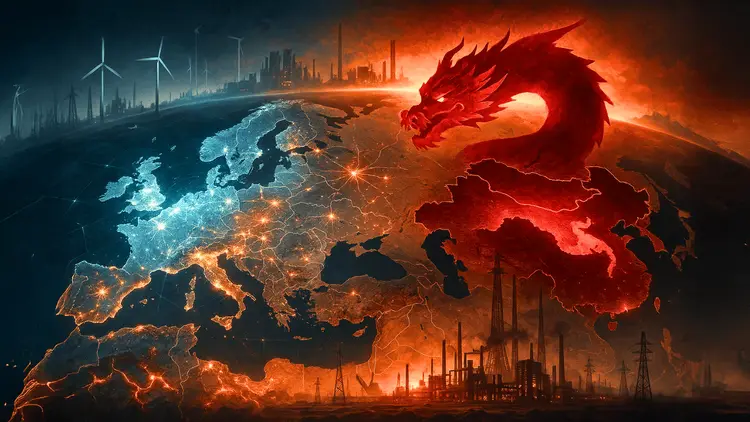
The European Union is being pressed to take decisive action in the global race for critical minerals as China tightens its grip on rare earth exports. A new report from the European Initiative for Energy Security (EIES) warns that Europe risks falling dangerously behind both Beijing and Washington unless it accelerates investment and coordination in its mineral supply chains.
The EIES report lands at a crucial moment. China’s recent export curbs on key rare earth elements and related products have rattled European manufacturers dependent on materials vital for defence systems, electric vehicles, and renewable energy infrastructure. As Europe re-arms in the wake of Russia’s war in Ukraine, the move from Beijing underscores a growing vulnerability: the EU’s limited capacity to mine, refine, and process its own critical resources.
EIES makes its message clear. The bloc must allow greater state intervention and commit “substantial, dedicated” funding for critical minerals in its next budget cycle. Without it, Europe’s ambitions for energy independence and industrial resilience could crumble under the weight of geopolitical reality.
Across the Atlantic, Washington has turned its mineral policy into a national security priority. Through the Inflation Reduction Act and the Defense Production Act, the U.S. government has taken direct equity stakes in producers like MP Materials (NYSE: MP), backing projects that secure domestic supply chains from lithium to rare earths. Meanwhile, China’s state-directed model gives its companies near-unlimited access to financing, ensuring dominance from the mine to the magnet.
Europe, by contrast, operates under a patchwork of national initiatives. The absence of a cohesive financial architecture has left projects struggling to close despite strong fundamentals. “As China and the U.S. pursue capital-backed political critical minerals agendas, the absence of a comprehensive European financial architecture exposes the continent’s limitations,” the report says.
To bridge that gap, EIES is proposing the creation of a European Minerals Investment Network, or E-MIN. The permanent platform would link investors, industrial buyers, and project developers across Europe and allied nations. By coordinating financing and sharing risk, E-MIN aims to transform policy goals into shovel-ready projects.
Albéric Mongrenier, executive director of EIES, called the initiative a necessary evolution. “We can no longer afford a piecemeal approach,” he said. “E-MIN would turn policy ambitions into impactful projects and secure Europe’s strategic autonomy.”
Petya Barzilska, EIES’s head of research and policy, echoed the sentiment, emphasizing that even viable mining projects face steep financial and regulatory hurdles. “Greater transparency and coordination are key,” she said. “We need to build trust and unlock capital for Europe’s critical supply chains.”
The report paints a stark picture of Europe’s dependency. From the lithium used in EV batteries to the cobalt and nickel that power renewable technologies, the continent remains reliant on imports—often from politically unstable regions or rivals like China. Even Norway’s Eramet manganese alloys smelter, highlighted in the report, depends on a global supply network vulnerable to disruption.
For Brussels, this is more than an economic issue—it’s a matter of sovereignty. As the EU accelerates its decarbonization and defence agendas, its ability to secure critical raw materials will determine whether it can stand on its own in a multipolar world.
EIES’s recommendations go beyond rhetoric. The group is urging the European Bank for Reconstruction and Development and the European Investment Bank to take on larger equity roles in mining ventures, mirroring U.S. actions. Such moves would signal to private investors that Brussels is serious about reducing risk and accelerating development.
Critics have long argued that EU regulations and environmental standards make large-scale mining nearly impossible. But EIES insists that strategic autonomy need not come at the expense of sustainability. Rather, it requires a pragmatic balance—supporting responsible extraction while investing in recycling, refining, and substitution technologies.
China’s tightening of rare earth export controls has intensified the pressure. In April, Beijing expanded its control list to include seven more elements and related products. Exporters must now apply for government licences, regardless of the buyer’s nationality. The result has been customs delays, rising costs, and growing unease among European manufacturers scrambling to source materials elsewhere.
These curbs are not new. For decades, China has used its dominance in critical minerals as leverage in global trade and diplomacy. What’s different today is the geopolitical backdrop—one defined by economic fragmentation, energy transition, and the rearmament of Europe.
While Brussels has identified 13 strategic projects to diversify supply and develop stockpiles modelled after its oil and gas reserves, progress has been sluggish. The Critical Raw Materials Act, though ambitious, remains underfunded and fragmented. Implementation has lagged, creating a dangerous mismatch between policy ambition and execution.
That’s why EIES’s call for immediate, coordinated financial action has struck a chord among policymakers and industry leaders alike. Europe’s challenge is no longer awareness—it’s acceleration.
The heart of the problem lies in the investment gap. Private capital is cautious, wary of long permitting timelines and uncertain returns. Public institutions are slow to move, constrained by bureaucratic oversight. This leaves Europe’s most promising mining ventures caught in limbo—approved on paper, but unfunded in practice.
E-MIN, if realized, could change that dynamic. By pooling risk and aligning interests, it could turn Europe’s mineral ambitions into a cohesive industrial strategy. In short, it could do for critical minerals what the European Coal and Steel Community once did for energy independence—bind nations together through shared purpose.
The stakes could not be higher. As global competition for resources heats up, control over critical minerals will define industrial strength and geopolitical leverage. Europe’s manufacturing base, from EV makers to aerospace and defence giants, depends on stable access to these materials. Without it, the continent risks losing its competitive edge and strategic autonomy.
The EIES report is a wake-up call, but also a roadmap. It outlines not just the risks of inaction, but the opportunities of leadership. With the right mix of investment, coordination, and political will, Europe can still reclaim its place in the global critical minerals race.
Conclusion
Europe stands at a crossroads. China’s export curbs have exposed the fragility of the EU’s supply chains and the urgency of building a resilient critical minerals ecosystem. The European Initiative for Energy Security has issued the warning—and the blueprint. Now it’s up to Brussels to decide whether to lead, follow, or be left behind.
The race for resources is no longer just about economics. It’s about sovereignty, sustainability, and survival in a world reshaped by energy and technology. Europe can either act decisively or watch others define its future.