
Rick Rule Doesn’t Do Panic—He Does Profits
Inside Rick Rule’s contrarian playbook for navigating uranium volatility, de-risking speculative stocks, and thinking five years ahead while the market panics.
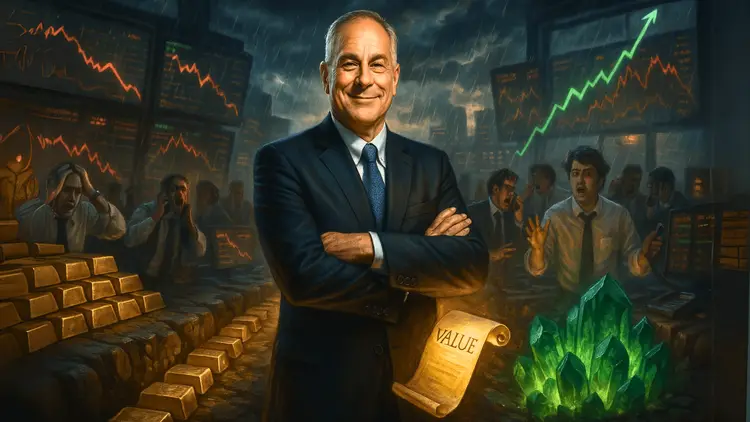
Rick Rule isn’t your average investor. The legendary speculator, known for his contrarian views and encyclopedic knowledge of commodities, sat down with Jay Martin to unpack how he's navigating the current chaos—and where he sees the biggest money being made. If you're chasing momentum, watching daily stock price swings, or letting social media dictate your investing mindset, Rule’s message is clear: you're doing it wrong.
Instead of playing the short-term game, Rick Rule is doubling down on long-term strategy. Take uranium, for example. While social media screams panic over declining spot prices, Rule sees opportunity. In fact, he loves the negativity. The worse the sentiment, the better the setup. To him, hate is a buy signal.
Rule isn’t focused on the spot market. That’s for amateurs. He’s paying attention to the term market, where real deals are made—multi-year contracts between suppliers and buyers that shape the future of supply. But that requires work. It’s arithmetic, not rhetoric. And most people simply aren’t willing to put in the effort. That’s where Rule gains his edge.
According to him, there are about 100 uranium stocks out there right now. Most are junk. Maybe 10 or 12 are worth a serious look. But within that tiny minority lies tremendous upside. The key is due diligence. It's not enough to believe in the sector; you need to analyze the balance sheet, understand feasibility studies, and track insider trading to see who’s really backing up their words with money. That’s how you separate hype from value.
And here’s where Rule really breaks with the crowd. Most investors, he says, are tragically mismatched. They think in years but act in weeks. A five-year outlook gets derailed by a bad Friday. They mix long-term strategies with short-term tactics—and then wonder why they lose. To Rule, this is the biggest pitfall he sees across the board, especially at investment conferences.
His solution? Discipline, process, and a strict personal rulebook. For every high-risk stock in his portfolio, he demands at least one hour of attention per month. No exceptions. That hour isn’t just a check-in; it’s a deep dive. He revisits the original reason he bought the stock, the catalysts he expected, and whether anything has changed. He writes a one-page essay for each position detailing why he bought it, what success looks like, what failure would mean, and what price he’d exit at. That’s serious investing. That’s how you avoid emotional decisions.
He calls it the delta—the gap between what something costs and what it’s worth. Most investors never bother to calculate value, so all they see is price. That’s why they panic when stocks drop. But for Rule, if the thesis is intact and the price falls, that’s good news. He doesn’t get nervous when stocks get cheaper; he gets excited. He knows the long game, and he’s playing it.
This mindset shows up in how he takes profit too. Rule shared a recent win that perfectly illustrates his approach. He bought an exploration stock expecting to hold it for 18 months, waiting for a drilling program to deliver results. But three months in, before any news had even hit, the market doubled the share price on speculation alone. Rule didn’t hesitate. He sold just enough to recoup his initial investment and pay his capital gains tax. Now he holds the rest for free. It’s a riskless ride—pure upside.
That’s not luck. That’s strategy. Rule understands the weight of what he owns, not just the vote of the crowd. He quotes Warren Buffett: "In the short term the market is a voting machine, in the long term it's a weighing machine." While others are trading narratives, Rule is calculating substance.
He’s also painfully aware of the limitations of mainstream financial advice. He believes that most of it is designed to keep investors docile, not informed. Rule’s approach is unapologetically independent. He reads feasibility studies for fun. He digs into the capital structure, checks insider ownership, and runs his own models. He’s not following the herd—he’s walking ahead of it.
That’s why he’s such a strong advocate for education. Through the Commodity University, Rule is helping a new generation of investors think like professionals. Each course is a deep dive into real-world investing from people who’ve been in the trenches. Not just theory—application. He believes that when you give people the tools to evaluate risk and value, they become dangerous in the best way.
As for what he’s buying and selling in 2025, uranium is still a core conviction. Despite price dips, Rule sees a sector still in early innings of a long bull market. He’s also looking at gold, particularly where sentiment has soured and valuations look compelling. And while the broader stock market continues to grind through volatility, he’s not afraid to hold cash, take profits early, or sit tight until the opportunity is undeniable.
It’s a refreshing philosophy in a time when noise often outweighs knowledge. Rick Rule doesn’t chase shiny objects. He builds positions based on value, conviction, and data. He knows the risks. He embraces them. But more importantly, he prepares for them.
In a world obsessed with fast gains, Rick Rule is proving that long-term thinking is still the smartest trade in the room.