
Access Granted: Nova Scotia’s Hidden Metal Makes a Comeback
Historic West Gore Mine Reawakens as Military Metals Gains Access to Explore High-Grade Antimony in Critical Minerals Push
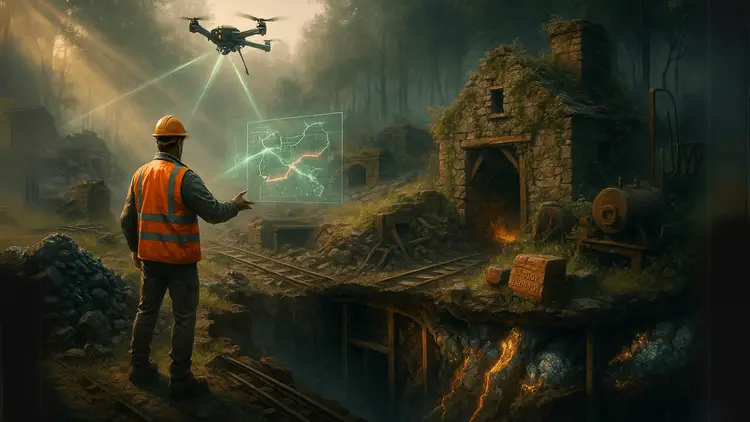
Military Metals just ignited a bold revival at Canada’s historic West Gore Antimony Project, striking an Access Agreement to unleash drilling and exploration at a legendary wartime metal site—primed to fuel North America’s critical mineral surge.
West Gore: From Wartime Legacy to Modern Opportunity
Tucked into the hills of Hants County, Nova Scotia, the West Gore Antimony Mine has roots tracing back to the 1880s. Initially discovered by John McDougall, commercial mining at West Gore formally began in 1884 and, through various boom and bust cycles, became Canada’s leading antimony producer during World War I. The site yielded over 35,000 tons of ore and more than 7,700 tons of high-grade antimony concentrate—at grades up to 46%. It was a key asset in hardening shell casings and supporting the Allied war effort.
Its dramatic wartime history even includes tragedy—operations were suspended after a shipment of concentrate headed for Wales was torpedoed by a German U-boat, causing the company’s financial collapse. But despite decades of dormancy, the ore body remains open at depth and along strike, making it ripe for modern exploration.
 Figure 1: Painting of the surface workings at West Gore circa 1916. Photo courtesy N.S. Dept. Natural Resources via NSMinerals.
Military Metals' Strategic Access Agreement
The newly signed agreement gives Military Metals access to the surface rights necessary to conduct exploration across the historically significant site. The initial term lasts one year, with three additional one-year renewals available. It allows for coordinated access between the company and local landowners—opening the door to drone-based magnetic surveys, drill targeting, and future resource delineation.
Scott Eldridge, CEO of Military Metals, said, “Critical minerals, especially antimony, continue to capture the headlines with supply disruptions now becoming a normal theme. Western countries are pressed to find domestic solutions... and we are excited to commence exploration activities at the past producing West Gore Antimony Project.”
The Geological Promise Beneath the Surface
Geologically, the West Gore deposit is part of the Halifax Formation—better known for gold than antimony. Yet here, nature carved an anomaly. The deposit consists of quartz fissure veins cutting through slate, calcite, and quartz, dipping steeply and traced along surface for over 365 meters. These veins host a rich suite of minerals, including native antimony, stibnite, kermesite, aurostibite, and several other antimony-gold alloys and oxides. Gold is often fine-grained or alloyed with antimony, a fact that went unnoticed in the early years of mining.
Modern exploration techniques—such as drone magnetics and diamond drilling—will help Military Metals reassess these overlooked zones with precision and accuracy that was impossible a century ago.
Premier Tim Houston Backs the Critical Minerals Future
Military Metals’ timing aligns with Nova Scotia Premier Tim Houston’s push to establish the province as a global hub for critical mineral development. His administration has actively lifted regulatory burdens and welcomed investment in mining and resource development. With Canada and its allies scrambling to secure critical minerals like antimony—essential for defense, semiconductors, and energy storage—Nova Scotia is becoming a strategic frontier.
A Complex, Layered History of Innovation and Conflict
Between the 1880s and 1917, West Gore saw multiple ownership changes, technological upgrades, and legal disputes. By 1905, shafts at the site reached depths of 700 feet, and ore was cobbed and sorted into high- and low-grade stockpiles. Much of the high-grade ore was shipped to England, while lower-grade material remained on site. At one level, miners encountered ore bodies of nearly pure native antimony—a rarity even by global standards.
The site’s ownership changed hands from the Dominion Antimony Company to the American Metal Company of New York and eventually to the West Gore Antimony Company. Litigation over mineral rights in 1908 paused operations, but the mine surged back during the war years. By 1917, West Gore had produced 6,861 ounces of gold alongside thousands of tonnes of antimony.
Mineralogy of West Gore: A Collector’s Curiosity
The mine’s complex mineralogy includes over 20 documented species. Stibnite, the primary ore mineral, occurs in sprays and masses, often alongside native antimony and gold. Other minerals found include kermesite, valentinite, pyrite, sphalerite, boulangerite, and aurostibite. Some rare oxides and potential secondary biogenic gold have also been identified, along with several unidentified Sb-Fe minerals.
Collectors today rarely find show-quality specimens at West Gore, but micro-mineralogists and academic geologists consider it one of the most important sites in Nova Scotia for studying native antimony and associated minerals.
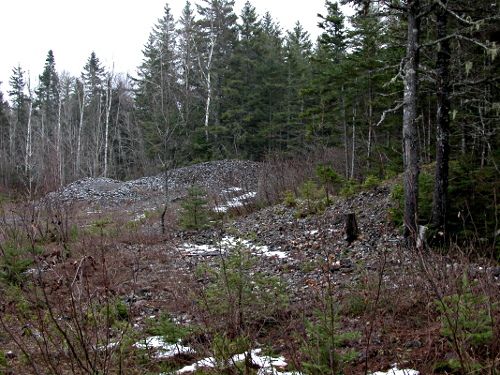 Figure 2: A general view of a portion of the mine property showing some of the dumps.
Military Metals' 2025 Exploration Strategy
Military Metals plans to begin with a high-resolution drone-based magnetic survey, which will map subsurface structures with minimal environmental disruption. This will guide the next phase—delineation of drill targets. Historical data, including diamond drilling and production records, are being digitized and reanalyzed to modern NI 43-101 standards.
With this systematic approach, the company aims to validate historical high-grade intercepts and explore extensions of known veins. Given that post-WWI exploration has been minimal, the potential for new discoveries is high.
Stockpiles and Surface Remnants: Clues for the Future
The site still contains stockpiles of low-grade material and remnants of old processing infrastructure, including shaft foundations and mill foundations. Some of these bricks are stamped with “Maple Glasgow,” a reminder of the site’s industrial past. These stockpiles may offer early-stage processing opportunities, even before fresh drilling results come in.
Why Antimony Now?
Antimony is a strategic mineral listed by Canada, the United States, and the European Union as critical to national security. It is used in ammunition, flame retardants, semiconductors, and grid-scale energy storage. With nearly 80% of global supply coming from China and Russia, Western governments are urgently seeking secure domestic sources.
West Gore may be the answer—Canada’s forgotten wartime asset, ready to rejoin the supply chain with modern infrastructure, regulatory support, and capital market backing.
Conclusion
Military Metals isn’t just reviving a mine—it’s reigniting a legacy. With strong political support, an experienced leadership team, and a property rich in both history and geology, the company is positioned to become a major player in the race for critical mineral security. West Gore once helped win a world war. Now, it may help secure a future where control of antimony isn’t determined by geopolitics—but by vision, exploration, and execution.
Sources
Disclaimer
The author holds shares in Military Metals Corp and may buy or sell at any time. This article is for informational purposes only, was prepared independently without company involvement, and utilized AI assistance. It is not investment advice. Consult a qualified financial advisor before making investment decisions.