
How Much Gold Does China Really Own, and What Is It Preparing For?
Inside Beijing’s dual-track bullion rush: how sovereign sanctions-proofing and household anxiety are quietly reshaping the global financial order.
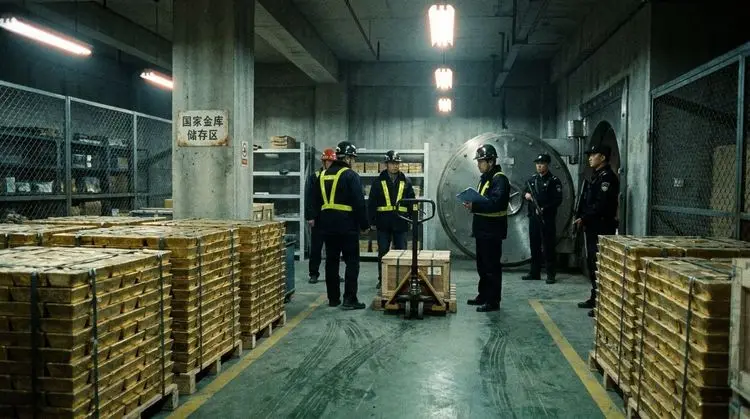
While most central bankers prefer to project an aura of calm bureaucratic detachment, officials at the People’s Bank of China have spent the past two years behaving like apex collectors on an aggressive shopping spree.
Vault doors across Beijing are swinging wide as the country absorbs metric ton after metric ton of bullion. What might look on the surface like an old-fashioned hoarding habit is actually a deliberate, two-pronged economic pivot: a state-level fortress-building exercise against Western financial reach, coupled with a nationwide retail scramble by citizens desperate to park their savings in an asset that cannot dissolve overnight.
The sovereign rationale begins not with economic theory, but with raw geopolitical risk. When Western allies froze roughly $300 billion in Russian central bank reserves following the 2022 invasion of Ukraine, finance ministries across emerging markets took immediate notes. The lesson was unmistakably clear: foreign exchange reserves denominated in dollars or euros held overseas are only yours until foreign capitals decide otherwise.
Physical bullion resting deep inside domestic vaults carries zero foreign counterparty claim. It cannot be locked out of the SWIFT messaging network, seized by presidential decree, or vaporized in a sanctions sweep. Analysts at Commerzbank have pointed out that China’s sustained accumulation represents a risk-management imperative, allowing Beijing to quietly swap foreign debt claims for unconditional sovereign autonomy.
Diversification away from Washington is equally driven by fiscal arithmetic. China has trimmed its holdings of U.S. Treasuries to multi-decade lows as America’s national debt climbs past historic records. Across the Atlantic, institutional research desks at Bank of Montreal have noted that persistent sovereign demand is recalibrating the precious metals market, transforming gold from a cyclical hedge into an indispensable strategic reserve asset.
Officially, the People’s Bank of China reports its gold reserves at roughly 2,410 tonnes, nudging bullion up to roughly 8.5 percent of its total foreign exchange holdings. Yet among precious metals veterans, the official balance sheet is widely suspected of telling only part of the tale.
Independent research published through Money Metals Exchange suggests that Beijing’s real monetary bullion stash may exceed 5,000 tonnes when factoring in off-the-books accumulation routed through sovereign wealth vehicles, state commercial banks, and domestic military agencies. Keeping the public tallies measured avoids triggering panic-buying and runaway price spikes across international commodity exchanges while accumulation remains underway.
State actors, however, are only half of the buying frenzy. While Beijing erects macroeconomic barricades, ordinary Chinese households are engineering their own quiet escape from domestic volatility.
For decades, residential real estate served as the default piggy bank for middle-class wealth, accounting for up to 70 percent of household savings. But with property developers struggling, residential projects stalled, and domestic stock exchanges languishing, that wealth engine has stalled. Left with rock-bottom deposit returns at commercial banks, retail shoppers have swarmed bullion counters like Caibai Jewelry to scoop up coins, physical bars, and viral one-gram "gold beans" to protect their family wealth against currency depreciation.
To keep pace with this structural demand, domestic mining companies are scouring the globe. Data from S&P Global Inc. (NYSE: SPGI) shows that while Western majors grapple with regulatory permitting lags and plateauing yields, Chinese state-backed miners are actively expanding domestic and cross-border production. Producers such as Shandong Gold Mining have significantly broadened overseas operational footprints to feed domestic consumption, aligning corporate output directly with national resource security.
None of this suggests that the U.S. dollar is facing an immediate exit. Replacing the greenback’s deep liquidity, legal transparency, and international utility in everyday global trade is not something pallets of physical gold can achieve overnight. Even with China’s relentless purchases, gold accounts for a modest single-digit slice of its total official reserves, whereas bullion makes up nearly 70 percent of sovereign reserves in the United States and Germany.
Beijing is not necessarily playing to dismantle the dollar tomorrow; it is simply ensuring that when geopolitical or economic squalls hit, its balance sheet is not standing exposed in the storm.
Sources
- Al Jazeera English: "Why is China buying up gold? Beijing’s gold purchases reflect a shift away from reliance on US dollar assets," reporting by Caolán Magee.
- World Gold Council: "Central Bank Gold Reserves Survey and Global Demand Trends".
- Federal Reserve Board: International Finance Discussion Papers, "De-Dollarization? Diversification? Exploring Central Bank Gold".
- Commerzbank Commodity Research: Precious metals reserve analysis and market commentary.
- S&P Global Market Intelligence: Global Gold Exploration and Lead-Time Project Pipeline Data.
- China Gold Association: National bullion consumption and state mining production releases.