
Trump-Pfizer Agreement Revives Global Pharma Markets
Pfizer’s U.S. breakthrough sparks a European rally as Trump’s drug pricing policy takes shape.
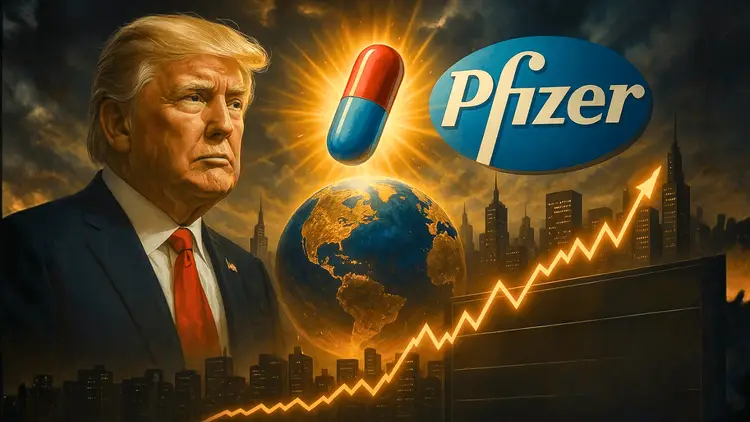
European healthcare stocks surged as clarity returned to a sector battered by political uncertainty. The catalyst was Pfizer’s groundbreaking agreement with President Donald Trump’s administration, which linked lower drug prices in the U.S. Medicaid program to tariff relief. The deal, unveiled midweek, sparked a rally across the European market, offering long-awaited relief to pharmaceutical giants and their investors.
Pfizer’s move to strike first has positioned the company as a bridge-builder between industry demands and Trump’s aggressive stance on U.S. drug pricing. For months, the administration had pressed pharmaceutical firms to cut costs, with patients in the United States paying nearly three times more for prescriptions than those in other developed economies. By offering Trump a “win” on pricing, Pfizer gained tariff concessions that could open new opportunities in the world’s largest pharmaceutical market.
Ripple Effect on European Stocks
The announcement ignited European healthcare equities. The region’s healthcare sector index climbed over 4 percent, marking its strongest daily jump in nearly five years. Shares of Ambu surged above 10 percent, Sartorius jumped 7 percent, and heavyweights like Roche, Merck, and AstraZeneca all rallied around 8 percent. Novo Nordisk, famed for its blockbuster weight-loss drug Wegovy, advanced 5 percent, while Novartis gained 3.5 percent.
Investors quickly interpreted Pfizer’s pact as a signal that other firms could follow with similar deals, unlocking a new wave of tariff relief and market certainty.
The Trump Factor
President Trump’s push for lower medicine costs has been one of his defining domestic battles. In July, his administration sent letters to 17 leading drugmakers demanding they slash U.S. prices to match international levels. Companies were given a September deadline to commit, and Pfizer was the first to publicly announce a deal.
Analysts argue that Trump’s strategy is less punishing than many in the industry feared. By offering tariff concessions in exchange for price cuts, the administration has created space for compromise. HSBC’s Rajesh Kumar noted that the announcement “offers some relief to the market” and sets the stage for further agreements.
Pharma Giants Enter the Conversation
Across Europe, drugmakers rushed to signal their willingness to engage constructively with Washington. Britain’s GSK confirmed ongoing discussions, Germany’s Merck KGaA highlighted talks on affordability and manufacturing, while Roche pledged cooperation through its U.S. unit Genentech. Novo Nordisk acknowledged it was exploring terms under Trump’s “most-favoured-nation” policy, and Novartis stressed its commitment to bridging cost disparities.
These public statements suggested a new phase of dialogue between Trump’s administration and an industry that had until recently been locked in confrontation.
Financial Impact on the Sector
The market reaction was immediate, but analysts caution that the earnings hit could vary widely. Berenberg estimates that a 50 percent cut in Medicaid sales—representing roughly 3 percent of major pharma revenues—could trim average sector earnings per share by 4 percent. GSK could face the steepest impact at 7 percent, while Pfizer, cushioned by its diversified portfolio, might see only a 1 percent hit.
Yet, as Bernstein’s Florent Cespedes observed, European firms have already invested nearly $200 billion in U.S. facilities. Such commitments to American manufacturing could shield them from harsher policy swings.
Investors See Fresh Momentum
For fund managers, the deal injected optimism into a sector long overshadowed by tariffs and political headwinds. Lucy Coutts of JM Finn highlighted that firms like GSK, AstraZeneca, Roche, and Novo Nordisk were poised to benefit as the policy fog lifted. Participation in TrumpRX, a new platform for discounted medicines, could offer an additional route to appease Washington while expanding patient access.
Angelo Meda of Banor SIM summed up investor sentiment: “Any positive news on that front can breathe new life into a sector that is currently trading at relative lows compared to the broader market.”
A Shot in the Arm for Healthcare
The Pfizer deal is more than a single agreement. It symbolizes the potential for compromise in a political climate defined by confrontation. For European pharma, it is both a reprieve from tariffs and a reminder that strategic concessions can secure market stability.
As other drugmakers follow Pfizer’s lead, the industry may find itself reshaping its U.S. strategies, balancing price cuts with manufacturing investments and political partnerships. For now, the deal has restored momentum to a sector badly in need of a boost.
Conclusion
The Pfizer-Trump agreement has transformed sentiment in healthcare markets, turning political uncertainty into a spark for growth. While the long-term financial impact of price concessions remains uncertain, the immediate boost to investor confidence is undeniable. For European drugmakers, the deal is both a challenge and an opportunity: adapt to a new U.S. reality or risk being left behind.