
Russia Bans Sulfuric Acid Exports: What It Means for Global Mining
Russia’s export ban on sulfuric acid is sending shockwaves through global mining, weaponizing a vital processing chemical and driving up production costs for copper and uranium.
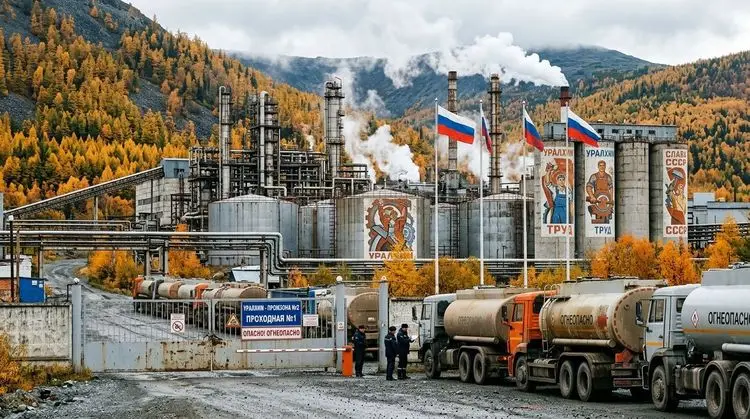
Moscow just put the squeeze on the global mining industry’s favorite workhorse compound, turning a quiet supply chain utility into a major operational headache.
Russian Prime Minister Mikhail Mishustin officially signed a decree temporarily banning all exports of sulfuric acid through December 31, 2026. Designed to ring-fence internal supplies for domestic mineral fertilizer producers and key industrial enterprises, the policy follows an earlier restriction on elemental sulfur exports. While protecting domestic agriculture makes immediate sense for Moscow, the outward ripples are creating severe localized friction across raw material supply chains.
Sulfuric acid, long dubbed the "King of Chemicals", is the unsung engine of modern industrial metallurgy. Beyond its foundational role in crop nutrition, the acid acts as the primary solvent for hydrometallurgical processing, dissolving copper, nickel, and uranium directly from raw ore.
The geographic fallout hits home immediately across Central Asia. Russia ranks as the world’s 12th largest sulfuric acid exporter, sending nearly all of its outbound volume across the border into Kazakhstan. That reality makes Moscow's policy shift particularly uncomfortable for Kazakh miners. As the world's premier uranium supplier and a top-ten copper producer, Kazakhstan relies heavily on in-situ recovery, an extraction process demanding continuous, high-volume acid injections.
Uranium titan JSC NAC Kazatomprom (LSE: KAP / OTC: NATKY) has already cited regional acid tightness as a central operational bottleneck constraining production expansion targets. Meanwhile, global operators like Ivanhoe Mines Ltd. (TSX: IVN / OTC: IVPAF) and First Quantum Minerals Ltd. (TSX: FM / OTC: FQVLF) are operating against a background of relentless global reagent inflation. In mining hotspots like the Democratic Republic of the Congo, high-strength sulfuric acid spot prices have breached $1,000 per tonne, doubling in a matter of months.
While Moscow’s resolution permits narrow exemptions for specific intergovernmental agreements or direct international transit, the broader economic trend remains clear. As nations increasingly balkanize critical chemical supply chains to guarantee domestic security, the global cost floor for energy transition metals moves in only one direction: up.
Source
- Interfax Information Group: Russia bans sulfuric acid exports until end of year to ensure sufficient supplies for mineral fertilizer producers, industry (Published September 14, 2026).
Disclaimer
Neither the author of this article nor JuniorStocks holds equity, stock options, or any other financial positions in JSC NAC Kazatomprom (LSE: KAP / OTC: NATKY), Ivanhoe Mines Ltd. (TSX: IVN / OTC: IVPAF), First Quantum Minerals Ltd. (TSX: FM / OTC: FQVLF), or any other companies mentioned in this publication. This content is published by juniorstocks.com strictly for informational purposes, was prepared independently without company compensation, and utilized AI assistance for text editing, formatting, and generating accompanying media. While geopolitical shifts in reagent supply chains and critical mineral markets represent significant developments for the mining sector, this article does not constitute investment or financial advice. Investors are strongly advised to conduct their own thorough, independent due diligence and consult with a qualified financial professional before making any investment decisions.