
From Iron to Ions: Rio Tinto’s Zesty Lithium Pivot
Rio Tinto’s Bold Push to Dominate the Global Lithium Market
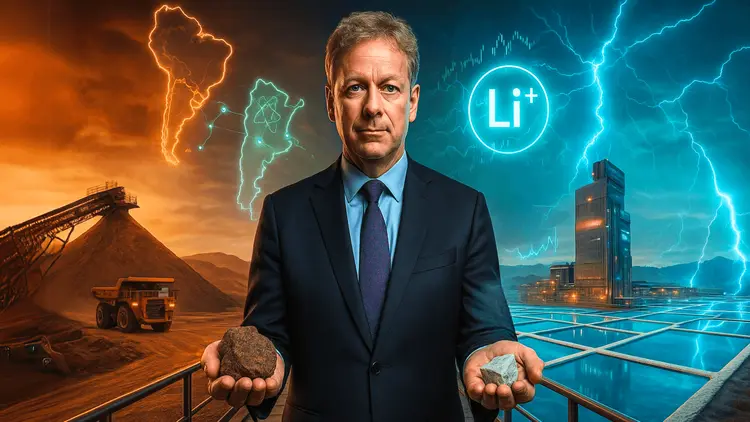
Rio Tinto (NYSE:RIO) is charging full-throttle into the lithium race, and CEO Jakob Stausholm is placing his chips on South America’s Lithium Triangle—Argentina, Chile, and Bolivia—as the epicenter of the world’s low-cost, high-quality lithium supply. Speaking at the Bank of America Global Metals, Mining and Steel Conference on May 13, 2025, Stausholm didn’t mince words: the region’s brine riches are the key to dominating the critical minerals market fueling the energy transition.
Brine is King: Why the Lithium Triangle Shines
“The Lithium Triangle is the sweet spot for lithium projects that can meet soaring global demand while keeping costs razor-sharp,” Stausholm declared. “The brine resources here are unmatched in quality and production efficiency.”
Rio Tinto is backing this bold claim with a $2.5 billion investment to supercharge its Rincon lithium project in Argentina, targeting a robust 60,000 tonnes of annual production by 2028. This move cements the company’s ambition to become a heavyweight in critical minerals, powering electric vehicles (EVs) and battery storage systems worldwide.
But it’s not just about throwing money at the problem. Stausholm’s strategy hinges on direct lithium extraction (DLE), a game-changing technology that’s efficient and eco-friendlier than traditional methods. Rio Tinto’s recent $6.7 billion acquisition of Arcadium Lithium has given it a 28-year head start in DLE expertise. “We’re not dabbling in experiments,” Stausholm quipped. “Arcadium invented DLE. We’re scaling proven tech to produce battery-grade lithium straight from the brine, skipping the costly, multi-step processing hard rock mines demand.”
Argentina’s Investment Glow-Up
Argentina, long a wild card for investors due to economic volatility, is looking more like a safe bet thanks to its new Incentive Regime for Large Investments (RIGI) legislation. Stausholm called it a “game-changer,” noting its promise of long-term stability through international arbitration if conditions shift. Pair that with IMF-backed reforms and the early lifting of foreign exchange controls, and Argentina is suddenly a darling for miners. “It’s clear the country is on the right track,” he said.
Rio Tinto’s lithium empire doesn’t stop at Rincon. With Arcadium’s assets now under its belt, the company is eyeing over 200,000 tonnes of lithium carbonate equivalent (LCE) annually by 2028. Add to that new mines in Argentina and Australia, plus processing plants in the US, China, Japan, and the UK, and Rio Tinto is building a global lithium supply chain to serve EV giants like Tesla, BMW, and General Motors. “We don’t need more M&A to grow,” Stausholm said with a smirk. “We’ve got scale, tech, and the right assets. Now it’s about execution.”
Europe’s Lithium Hopes: The Jadar Jigsaw
Beyond South America, Rio Tinto is wrestling with its $2.4 billion Jadar project in Serbia, a potential lithium jackpot that’s been stalled since 2022 by environmental protests. A partial win came in July 2024 when Serbia reinstated the project’s license, but hurdles remain—environmental and construction permits are still pending, and a proposed ban on lithium and borate mining looms in the Serbian parliament.
Jadar’s exclusion from the European Union’s Critical Raw Materials Act (CRMA) list of 47 strategic projects raised eyebrows, with some whispering that the decision was swayed by the project’s controversies. The European Commission, however, has promised a new application round later this year for non-EU projects, which could open doors to funding for Jadar. If approved, the mine could churn out 58,000 tonnes of battery-grade lithium carbonate annually—enough to power one million EVs and meet 90% of Europe’s current lithium demand.
Staying Lean, Not Price-Dependent
Stausholm is keeping his eyes on the prize, not the lithium price ticker. “We’re not betting on market swings,” he said. “Our focus is staying at the bottom of the cost curve, and we’re confident we can hold that edge.” With lithium still a small slice of Rio Tinto’s iron ore and copper-dominated portfolio, the company sees explosive growth potential as EVs and renewable energy storage take off.
From the Lithium Triangle’s brine pools to Serbia’s contested mines, Rio Tinto is playing a high-stakes game to secure its spot as a lithium titan. With billions invested, cutting-edge tech in its arsenal, and a laser focus on execution, Stausholm’s vision is clear: dominate the critical minerals market, one brine deposit at a time.