
DoorDash Delivers a $5 Billion Whopper: Deliveroo and SevenRooms on the Plate
From Takeout to Takeover: How DoorDash’s $5 Billion Bet Redefines Food and Hospitality
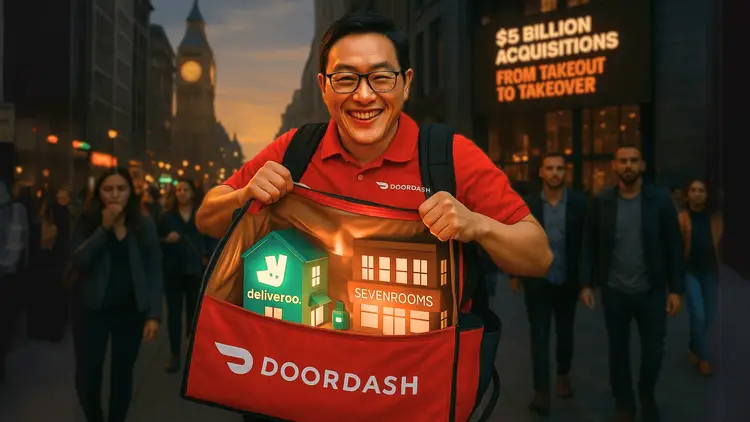
Craving a global feast? DoorDash just dished out a $5 billion game-changer that’s spicing up the food delivery world. In a sizzling five-hour spree, the San Francisco-based giant devoured UK delivery titan Deliveroo Plc for £2.9 billion ($3.9 billion) and hospitality tech star SevenRooms Inc. for $1.2 billion. This isn’t just a menu upgrade—it’s a high-speed chase for worldwide dominance, and DoorDash is delivering with gusto. From London’s curry takeaways to New York’s gourmet kitchens, here’s why these blockbuster deals are shaking up the delivery and dining scene—and what they mean for your next order.
Deliveroo Deal: A $3.9 Billion Ticket to 40 New Markets
DoorDash’s acquisition of Deliveroo is less a purchase and more a seismic land grab. With a foothold in the UK and operations spanning Europe, Asia, and the Middle East, Deliveroo brings 40 new markets to DoorDash’s table. Together, the duo processed a jaw-dropping $90 billion in gross order value last year, fueled by 50 million monthly active users. This isn’t just about slinging pizzas—it’s a direct challenge to European heavyweights like Just Eat Takeaway.
The Deliveroo deal catapults DoorDash from a U.S. powerhouse to a global contender overnight. With regulatory approvals and 75% shareholder buy-in still needed (15.4% are already on board, including CEO Will Shu), the deal is slated to close in Q4 2025. If it clears, expect DoorDash to leverage Deliveroo’s infrastructure to dominate new regions, blending local expertise with its tech-driven efficiency. Move over, Uber Eats—there’s a new sheriff in town.
SevenRooms: $1.2 Billion Bet on the Full Dining Experience
While Deliveroo expands DoorDash’s geographic reach, SevenRooms redefines its scope. For $1.2 billion, DoorDash snagged the hospitality tech platform that powers reservations and guest experiences for 13,000+ restaurant groups, including A-listers like Marriott International, MGM Resorts, and Wolfgang Puck. This isn’t just a shot at OpenTable and Resy—it’s DoorDash’s bid to own the entire dining journey, from booking a table to ordering takeout.
The seeds were sown in 2022 when DoorDash and SevenRooms piloted in-app reservations in select U.S. cities. Now, with SevenRooms fully integrated, DoorDash can supercharge its ecosystem. Imagine this: you discover a restaurant on DoorDash, book a table, order delivery the next day, and get personalized offers—all in one app. By cross-leveraging data and expanding white-label services, DoorDash is positioning itself as the backbone of modern hospitality. Sorry, Resy—this is next-level.
Earnings Beat Amid Expansion Costs
DoorDash didn’t just make headlines with acquisitions—it backed them up with a stellar earnings report. Quarterly revenue hit $3 billion, with net income at $193 million, blowing past Wall Street’s expectations. Gross order value soared to $23.3–$23.7 billion, driven by DoorDash’s push into grocery delivery. Perishables are the new pizza, apparently, with consumers spending more on fresh goods than ever.
But the stock market wasn’t all cheers. DoorDash’s shares dipped 5% in pre-market trading, spooked by the hefty price tag of its global ambitions. A $2.85 billion bridge loan from JP Morgan Cazenove Holdings will fund the Deliveroo deal, and adjusted EBITDA projections of $600–$650 million fell short of analyst hopes. Investors are nervous about the short-term costs, but DoorDash is betting big on long-term synergies—think revenue boosts, platform integrations, and a massively expanded user base.
The Bigger Picture: DoorDash as a Global Commerce King
DoorDash’s moves come at a pivotal moment. With Prosus snapping up Just Eat Takeaway and Wonder Group grabbing Grubhub, consolidation is the name of the game. But while others play defense, DoorDash is going all-in. These acquisitions aren’t just about scale—they’re about building a digital infrastructure that spans food, hospitality, and local commerce. From logistics to loyalty programs, DoorDash is crafting a platform that could become as indispensable as Amazon.
The risks are real—regulatory hurdles, shareholder approvals, and debt-fueled growth could trip up even the savviest player. But DoorDash’s execution is undeniable. With a war chest, a proven track record, and now a global footprint, it’s outpacing rivals and redefining what a delivery company can be. This isn’t about dropping off burgers anymore—it’s about delivering the future.
Why It Matters: DoorDash’s Decade-Defining Ambition
DoorDash’s $5 billion buying spree is a masterclass in strategic audacity. Deliveroo unlocks 40 markets; SevenRooms reimagines dining. Together, they transform DoorDash from a delivery app into a global juggernaut. Backed by strong earnings and a relentless focus on innovation, the company is betting that today’s investments will make it the defining consumer platform of the 2030s.
So, whether you’re craving sushi in London or booking a rooftop table in Vegas, DoorDash wants to be your go-to. The question isn’t whether it can pull this off—it’s whether anyone can keep up. One thing’s for sure: DoorDash isn’t just delivering dinner. It’s serving up a vision for the future, one acquisition at a time.