
Why Defense Budgets Mean Nothing Without Secure Supply Chains
How Beijing's chokehold on two obscure minerals is forcing the West into a frantic, multi-billion-dollar race to rebuild its defense supply chains from the ground up.
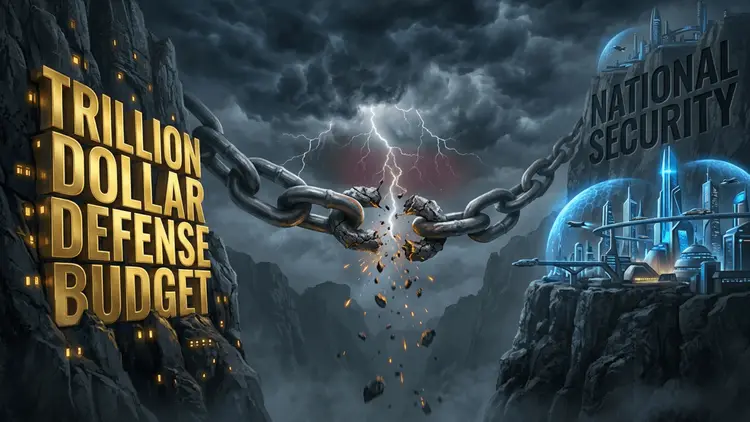
The world is arming itself to the teeth, pumping trillions of dollars into next-generation defense systems, but the ultimate vulnerability isn't a lack of capital. It is the dirt we stand on, or rather, the dirt we do not have. With global military spending surging to heights unseen in over a decade and a half, defense contractors and allied governments are experiencing a rude awakening. A nation can authorize a multi-trillion-dollar defense budget, but it cannot print antimony and tungsten.
These two critical minerals are the unglamorous, irreplaceable backbone of modern warfare. Antimony is the vital hardening ingredient for armor-piercing ammunition, explosive formulations, and night vision goggles. Tungsten, boasting exceptional density, is non-negotiable for kinetic energy penetrators and high-temperature aerospace turbines. The geopolitical kicker is that the West has effectively outsourced its supply chains for these dual-use elements to its biggest rival. China controls the overwhelming majority of global tungsten production and antimony refining. Predictably, Beijing has weaponized this leverage, choking off exports with strict quotas and bans that have sent market prices into the stratosphere.
The United States military is staring down the barrel of a strict statutory deadline to eradicate Chinese and Russian-sourced tungsten and antimony from its defense industrial base by 2027. The result is a frantic, heavily subsidized domestic and allied mineral revival, elevating a handful of key mining operations from obscure junior developers to absolute cornerstones of national security.
Leading the charge on American soil is Perpetua Resources Corp (Nasdaq: PPTA). The company is advancing the Stibnite Gold Project in Idaho, holding the largest known economic reserve of antimony in the United States. Underscoring the sheer urgency of the situation, the U.S. Export-Import Bank advanced a proposed $2.7 billion senior secured long-term loan in March 2026 to fund the project's construction. This historic capital injection firmly positions the company as the heavy-hitting linchpin of America's future antimony supply.
Not far behind in the Great Basin is NevGold Corp (TSXV: NAU), aggressively pivoting its strategy to address the dual-metal shortage. Operating at its Limousine Butte project in Nevada, the company recently intercepted impressive high-grade antimony mineralization from surface drilling. They are taking a pragmatic, dual-track approach: pushing to extract antimony from historical leach pads for near-term production by 2027, while simultaneously targeting a maiden antimony-gold resource estimate by the second quarter of 2026.
Over in Europe, the focus shifts to Military Metals Corp (CSE: MILI | OTCQB: MILIF). In early April 2026, the company laid its cards on the table by delivering a maiden mineral resource estimate for its flagship Trojárová project in Slovakia. Containing roughly 67,000 tonnes of antimony alongside significant gold, the asset is officially the largest modernly defined antimony resource in the European Union. This strategic foothold has drawn the attention of heavyweight mining strategist Christopher Ecclestone of Hallgarten & Company, who recently highlighted the company's significant leverage in this global geopolitical shift.
North of the border, Antimony Resources Corp (CSE: ATMY) is making its own waves. Formerly known as Big Red Mining Corp before an aptly timed 2025 rebrand, the company is actively developing the Bald Hill Antimony Project in New Brunswick. They recently announced the initiation of environmental and technical studies and are working rapidly towards their own maiden resource estimate. Meanwhile, legacy operators like United States Antimony Corporation (NYSE American: UAMY) remain crucial fixtures in North American milling and smelting, functioning as vital downstream processors even as the upstream exploration race accelerates around them.
The era of frictionless, globalized procurement for defense materials is decisively over. As military budgets inflate and geopolitical battle lines harden, the real war is being fought in the trenches of the critical minerals market. The companies that can successfully pull these vital resources out of the ground in allied jurisdictions are no longer just mining metals; they are minting national security.
Sources:
Information compiled from official corporate press releases and regulatory filings from Perpetua Resources (March 2026 EXIM Loan update), NevGold Corp (April 2026 Limousine Butte drill results), Military Metals Corp (April 2026 Trojárová resource estimate), and Antimony Resources Corp (April 2026 development updates), alongside market analysis from Hallgarten & Company and critical mineral supply chain reporting from InvestorNews.
Disclaimer:
The author holds shares in Military Metals Corp and may buy or sell at any time. This article is for informational purposes only, was prepared independently without company involvement, and utilized AI assistance. It is not investment advice. Consult a qualified financial advisor before making investment decisions.