
"We Started Production in May": Why the Pentagon Is Turning to US Antimony Corp
As Pentagon stockpiles run low, North America's sole antimony producer steps up to secure the defense supply chain and break decades of reliance on Chinese critical minerals.
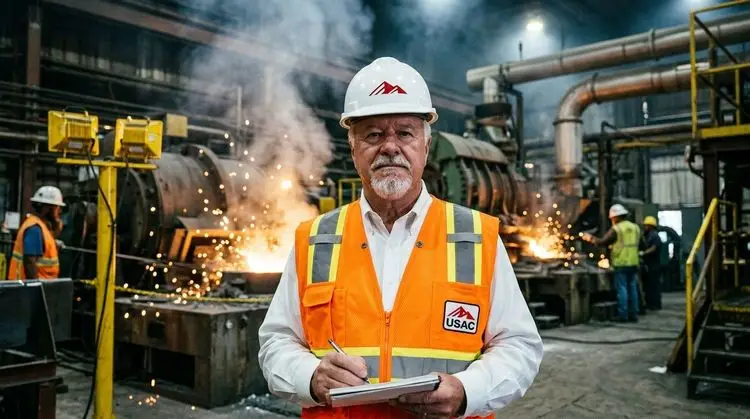
American defense arsenals are running on fumes after years of supplying high-stakes foreign conflicts, and Washington has finally woken up to an uncomfortable reality: you cannot fire a bullet, launch a missile, or build a drone without critical minerals that Beijing has spent decades controlling.
Appearing on Fox Business’s Mornings With Maria, Gary Evans, Chairman and CEO of United States Antimony Corporation (NYSE: UAMY), outlined how the domestic mining sector is stepping up to reverse decades of reliance on Chinese mineral reserves and rebuild depleted military stockpiles.
With the Pentagon having expended over 1,200 Patriot interceptors during recent Middle East operations alongside vast quantities of long-range strike weapons, the push to secure domestic military inputs has shifted from a economic policy debate into a national security emergency. Antimony serves as an indispensable hardening agent for lead munitions, ignition systems for primers, and vital components inside military drones. As the only integrated producer of antimony in North America, United States Antimony Corporation (NYSE: UAMY) occupies a uniquely vital position in defense manufacturing. The company initiated production in May, delivered initial shipments through early summer, and is currently fulfilling orders five and six under a $245 million contract awarded to supply national defense stockpiles.
The strategic pivot was showcased during a high-profile summit at the State Department, where Evans met directly with President Donald Trump, Secretary of State Marco Rubio, and Interior Secretary Doug Burgum. The gathering underscored a whole-of-government approach to revitalizing a domestic mining industry hampered for 30 years by strict environmental regulations and aggressive Chinese price manipulation. Beyond political alignment, the administration announced $100 million in funding for universities and technical institutions to train the next generation of mining engineers, geologists, and physicists. Operational support was equally direct, with Interior Secretary Burgum offering immediate assistance to resolve regulatory hurdles facing the company's projects in Alaska.
Antimony is not the only critical mineral facing severe supply constraints. China’s late 2024 export curbs also targeted tungsten, an essential element for tank armor plating and submarine construction that has seen no commercial mining production in the United States or Canada for over 12 years. Spurred by these supply squeezes, tungsten prices have surged 600% in 2026. To counter the deficit, United States Antimony Corporation (NYSE: UAMY) is fast-tracking its Fostung tungsten deposit in Canada, aiming to conduct bulk sampling and extract raw ore within the year, an aggressive timeline for an industry traditionally accustomed to multi-year permitting delays.
Source
- Fox Business, Mornings With Maria, Broadcast Interview with Gary Evans, Chairman and CEO of United States Antimony Corporation (NYSE: UAMY), August 10, 2026.
Disclaimer
Neither the author of this article nor JuniorStocks (juniorstocks.com) holds equity, stock options, or any other financial positions in United States Antimony Corporation (NYSE: UAMY) or any other companies mentioned in this publication. This content is published by JuniorStocks strictly for informational purposes, was prepared independently without company compensation, and utilized AI assistance for research, text editing, formatting, and content generation. While critical minerals and domestic defense supply chain initiatives represent significant strategic developments, this article does not constitute investment or financial advice. Investors are strongly advised to conduct their own thorough, independent due diligence and consult with a licensed financial professional before making any investment decisions.