
Powell: Fed wants to fight inflation fast
Bringing down inflation and avoiding a recession will be a "tough task," central bank governor says
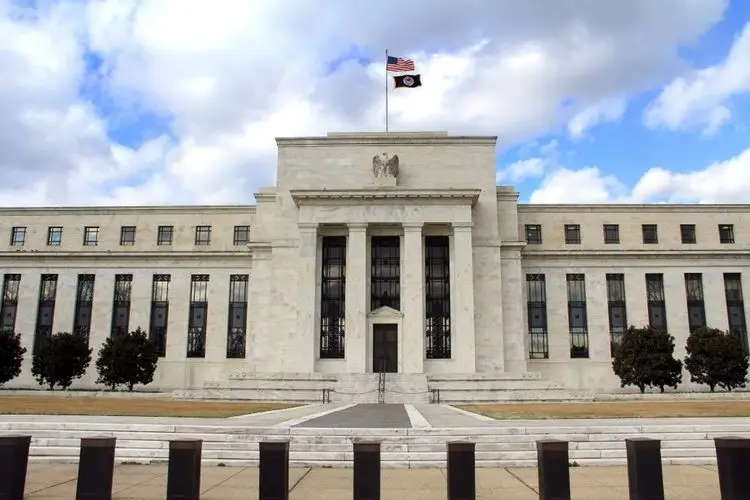
Federal Reserve Chairman Jerome Powell said the central bank stands ready to raise interest rates in half-a-percentage-point increments, high enough to intentionally slow the economy if it concludes that such moves to cut it of inflation are justified.
"If we think it's appropriate to raise interest rates by half a percentage point at one or more meetings, we will do that," Powell said during a moderated discussion following a speech Monday at the National Association for Business Economics in Washington, D.C.
Powells Comments took a tougher tone than he had made in a news conference just days earlier following the Fed's decision to raise interest rates by a quarter point, signaling a stronger bias to hike rates until the central bank sees clear evidence to do so that inflation falls to its 2% target.
The Fed raised interest rates from near zero to a range of 0.25% to 0.5% last week, and officials have slated a series of further hikes to take the interest rate to just under 2% by the end of this year and in the to around 2.75% next year.
Powell has repeatedly stressed the uncertainty facing Fed officials as they navigate the aftermath of the Covid-19 pandemic and the recent war in Ukraine, and he said they are ready to take policy in a more disruptive direction to steer.
"If we find that we need to take a more restrictive stance beyond the usual level of neutrality, we will," Powell said. Most Fed officials believe that a neutral interest rate is 2.5%, assuming 2% annual inflation.
Stocks and bonds fell after Powell's speech. The Dow Jones Industrial Average ended Monday down 0.58%. The yield on the benchmark 10-year Treasury note rose to 2.298% in afternoon trade as yields rise when bond prices fall.
"Powell has really spoken out here, laying out a lot of serious concerns about inflation in the context of what appears to be an overheated labor market," said Tim Duy, chief economist at research firm SGH Macro Advisors. Compared to Powell's press briefing last week, where he spoke on behalf of the Fed's Interest Committee, "this was even clearer and more likely reflects his own views."
Some critics say the Fed is being forced to aggressively raise rates now because officials waited too long to roll back stimulus last year. At last week's Fed meeting, St. Louis Fed President James Bullard spoke out against the decision to go for a larger half-point hike, noting that higher inflation would lead to a fall in inflation-adjusted interest rates even if the Fed hikes nominal interest rates.
"The committee will have to act quickly to address this situation or risk losing credibility on its inflation target," he said in a statement last week outlining his decision.
Annual inflation rose to 6.1% in January, according to the Fed's preferred measure, according to the latest available data. Core inflation, which excludes food and energy, rose to 5.2%. Most Fed officials now expect core inflation to come in at 4.1% by the end of the year if they hike rates to around 2% this year, according to last week's forecasts.
Powell said the inflation outlook had deteriorated significantly even before Russia invaded Ukraine, and he warned that the fallout from the war in Europe and the West's response to heavy sanctions on Russia's economy will further exacerbate supply chain disruptions and could drive up prices for key commodities used to manufacture a range of goods. In a sign of Powell's growing intolerance of inflationary surprises, his speech was titled "Restoring Price Stability."
In January, the Fed still expected inflation to ease this year as supply chain congestion improved. "That expectation has already been shattered," Powell said on Monday. "To the extent that it continues to fall apart, my colleagues and I may conclude that we need to act faster. And if so, we will."
Powell compared the potential inflationary shock that a rise in prices for a variety of commodities, including energy, as a result of the Ukraine war could trigger with the oil price shocks triggered by geopolitical events in the Middle East in the 1970s. That story was "not happy" for the Fed as it resulted in double-digit inflation, Powell said.
In central bank textbooks, the impact of supply shocks on inflation is seen as temporary unless the public expects persistently higher future inflation. Expectations were not as stable in the 1970s, and the shocks of 1973 and 1979 led to broader inflation. However, according to consumer surveys and market-based metrics, inflation expectations have been relatively stable since the 1990s, taking the edge off the oil shocks of 1990 and 2003.
The question is whether 2022 will be more comparable to the shocks of the 1970s or more recent episodes. The shock in Ukraine is "more of a classic supply shock that you want to see through," Powell said. But he said the Fed was less inclined to ignore the shock than it otherwise would have been, as high inflation could cause consumer and business expectations to rise to levels that reflect a much more destabilizing psychology could create prices.
"I wouldn't say we're comfortable with the typical looking-through approach," Powell said.
The Fed's job now is to bring inflation down by raising interest rates to dampen demand, but not so aggressively that the economy slips into recession. Such a so-called soft landing is still possible, Powell said, pointing to three instances in the past 60 years where he thinks the Fed has achieved such a result.
However, he added some caveats: "Nobody expects that a soft landing will be easy to achieve in the current situation - very little is easy to achieve in the current situation.
Monetary policy is a blunt instrument that cannot be used with surgical precision Powell added. "My colleagues and I will do our best to accomplish this difficult task.
Powell's comments on the difficulties facing the Fed underscore the growing risks of a recession from aggressively raising interest rates to curb inflation. Raising the cost of borrowing tends to constrain consumer and business borrowing and spending, and historically has often led to rising unemployment and a decline in economic output.
The Fed still expects supply chains to heal and workers to return to the workforce to bring down inflation this year and next. Contrary to the stance the Fed has taken through 2021, Powell said it can no longer guide its policy by forecasting when such relief will materialize.
"When setting policy, we will be guided by actual progress on these issues and not assuming significant short-term relief on the supply side," he said.
Duy said these comments are the clearest confirmation that the urgency of the Fed raising rates has increased in recent weeks. "They will continue to raise interest rates until they see clear evidence that they can put their inflation concerns on hold," Duy said. "Instead of hoping inflation will go down, they need clear and compelling evidence that inflation is going down."
Powell acknowledged for the first time the possibility that the economy is undergoing a profound transformation in which many of the forces that have contributed to lower inflation over the past 25 years, including globalization, may recede. Globalization is making it harder for companies to raise prices, and a more segmented global economy may reverse some of the forces that have kept prices low for the past few decades.
Powell said he never found these arguments for higher future inflation before the pandemic particularly compelling, but said it was more difficult to say how the pandemic, the unusually strong political response and the war in Ukraine would transform the economy.
"Nobody sits around at the Fed waiting for the old regime to come back. I think people are very aware of the situation we're in," he said. "It's a series of shocks that's happened and we have a job to do and we're very focused on getting that job done."