
Jefferies Passes Go, McDonald’s Collects a Buy Rating
McDonald’s revives its legendary Monopoly promotion in the U.S., aiming to boost traffic, digital sign-ups, and investor confidence amid a fiercely competitive fast-food market.
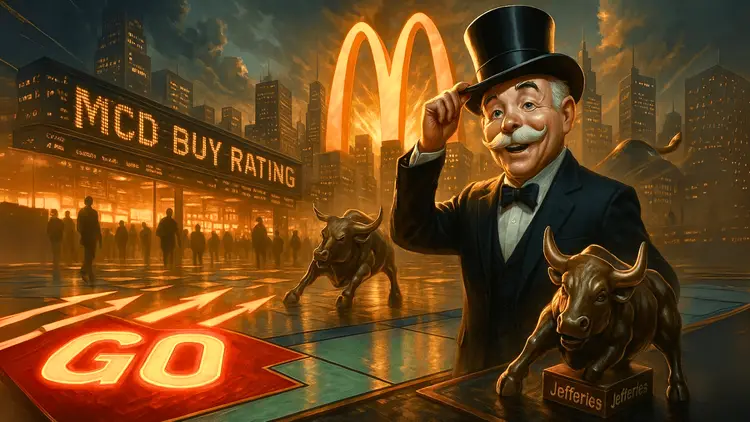
McDonald’s is dusting off one of its most iconic marketing campaigns, bringing the Monopoly game back to the U.S. for the first time in nearly a decade. For Wall Street, this is more than just a nostalgic throwback. Jefferies analyst Andy Barish sees it as a potential turning point for the fast-food giant, giving the company a powerful lever to boost sales, loyalty sign-ups, and digital engagement at a time when the industry is under pressure.
The stock hasn’t been a runaway success in 2025, up just over three percent year-to-date compared to the S&P 500’s fifteen percent surge. Still, Jefferies is holding firm on a Buy rating and a $360 price target, betting that a mix of value-driven promotions and renewed customer excitement will tip the scales. McDonald’s has struggled with weaker global same-store sales and consumer cutbacks in the face of inflation, yet it has consistently beaten profit expectations. Monopoly, coupled with its recently introduced Extra Value Meals, could be the jolt it needs.
McDonald’s is pairing the promotion with discounts of about fifteen percent on Big Macs, McCrispys, and other staples when ordered as part of value meals. Analysts expect this to trim near-term sales growth but attract heavier foot traffic in the fourth quarter. To fuel the push, the company is pouring forty million dollars into advertising while offering rent rebates to franchisees, who operate more than ninety percent of U.S. locations. The campaign underscores McDonald’s reliance on big swings to maintain customer momentum.
The Monopoly brand, however, isn’t without baggage. The 1990s and early 2000s scandal, in which security officer Jerome Jacobson rigged the game and orchestrated a massive fraud, remains a cautionary tale in marketing history. More than fifty people were convicted, and McDonald’s reputation took a hit before the company shifted the campaign abroad. The story was retold in HBO’s documentary “McMillions,” a reminder of how high-profile the controversy was. Yet in international markets the game has thrived, showing its staying power when managed properly.
This year’s U.S. revival aims to blend nostalgia with fresh incentives. The prize pool features a Jeep Grand Cherokee and a $10,000 Lowe’s shopping spree, alongside traditional food giveaways. McDonald’s is also experimenting with new beverages inspired by its CosMc’s concept, from colorful refreshers to spiced lattes, as it works to capture younger consumers and expand beyond its burger base.
Still, the fast-food battleground is unforgiving. Wendy’s and Burger King are pushing their own discount strategies, while rising costs continue to squeeze margins across the sector. Monopoly will generate headlines and short-term buzz, but whether it translates into sustained earnings momentum remains to be seen.
For now, McDonald’s is betting that a mix of nostalgia, value, and marketing firepower can do what fundamentals alone have struggled to accomplish this year—reignite excitement under the Golden Arches and remind customers why they keep coming back. The stakes may be high, but if Monopoly delivers as expected, McDonald’s could be rolling the dice on a winning move.
Conclusion
The return of Monopoly is more than a marketing stunt. It is McDonald’s attempt to reassert itself as the undisputed master of fast-food promotion while navigating a challenging economic backdrop. Investors and customers alike will be watching to see if nostalgia still pays dividends in 2025.