SPONSORED

Intel Weighs $5 Billion Offer from Apollo Amid Growing M&A Tension

Apollo’s multibillion-dollar investment offer signals a potential turning point for Intel, as it navigates a strategic decision between independence and a potential Qualcomm merger.
•• 5 Min
Intel Weighs $5 Billion Offer from Apollo Amid Growing M&A Tension

Intel, once a trailblazer in the semiconductor industry, now finds itself navigating a complex and challenging phase. The company, under intense competitive pressure and facing declining sales, has been presented with a multibillion-dollar offer from Apollo Global Management Inc. This potential investment could be a pivotal lifeline or strategic shift for the chipmaking giant as it contends with the prospect of a takeover from Qualcomm Inc.

Intel’s Struggles in a Competitive Market

Intel's difficulties are well-documented. With its stock value falling by more than 50% this year, the company is grappling with its third consecutive year of shrinking sales. Once a dominant force in the chip industry, Intel has been overtaken by competitors like Qualcomm and Broadcom. The challenges faced by the company stem from a combination of factors: delays in its product roadmap, increased competition, and the rapidly evolving technological landscape.

Apollo’s Multibillion-Dollar Offer

In recent days, Apollo Global Management has indicated that it is prepared to make an equity-like investment of up to $5 billion in Intel. This offer, while significant in monetary terms, also signals a vote of confidence in Intel’s ability to navigate its turnaround strategy. Apollo is no stranger to the chip industry; the firm recently acquired a stake in a joint venture controlling Intel's Ireland chip plant for $11 billion, solidifying an existing relationship between the two companies.

Apollo’s expertise in distressed investing, coupled with its significant capital reserves, positions it as a potential key player in Intel’s recovery. The firm's interest in Intel underscores the chipmaker's potential for revitalization, even as it faces one of the most difficult periods in its 56-year history.

Qualcomm’s Takeover Intentions

At the same time, Qualcomm Inc. has floated the idea of a friendly takeover of Intel, raising the possibility of one of the largest-ever mergers in the semiconductor industry. Qualcomm’s move comes as Intel works to reinvent itself with new products and external partnerships. The prospect of a Qualcomm-Intel merger, however, presents significant challenges.

A combination of the two companies would almost certainly draw the attention of antitrust regulators around the world. Given the critical role that semiconductors play in modern technology—from smartphones to electric vehicles—the deal would face intense scrutiny. Analysts have pointed out that Qualcomm, with only $13 billion in cash on hand, would likely need additional investors or asset divestitures to make the acquisition feasible. Beyond financial considerations, the strategic fit between Qualcomm and Intel could also raise concerns about execution.

Intel’s Turnaround Strategy Under Pat Gelsinger

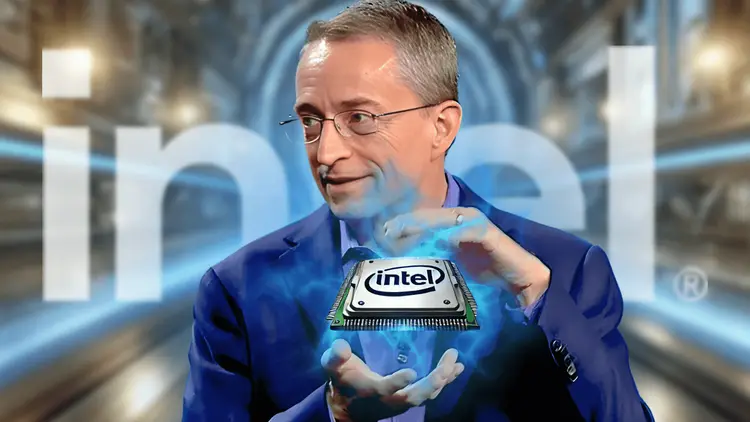
CEO Pat Gelsinger, who took the helm at Intel in 2021, has been spearheading an aggressive turnaround strategy for the company. Intel’s recent announcements reflect a renewed focus on innovation and operational efficiency. Among these announcements is a multibillion-dollar deal with Amazon Web Services (AWS) to co-invest in custom AI semiconductors. This partnership is a key component of Intel’s strategy to diversify its revenue streams and position itself at the forefront of AI-driven technological developments.

Gelsinger has also outlined plans to transform Intel’s ailing manufacturing business into a wholly owned subsidiary. This move is seen as a way to streamline operations and make the company more agile in a rapidly changing market. However, Intel has also made difficult decisions, such as shelving plans for new factories in Germany and Poland to cut costs and focus on core initiatives.

The Impact of Apollo’s Offer on Intel’s Future

Apollo’s offer could provide Intel with a much-needed injection of capital as it continues to execute its turnaround strategy. The investment could help Intel stay independent, allowing the company to remain competitive without needing to merge with a rival like Qualcomm. However, Apollo’s involvement may come with strings attached, as the asset management firm has a history of influencing the strategic direction of the companies it invests in.

If Intel accepts Apollo’s offer, it could find itself with more flexibility to pursue its long-term goals, such as expanding its chip manufacturing capabilities and continuing to innovate in the AI space. On the other hand, rejecting the offer could push Intel closer to a merger with Qualcomm, a move that would reshape the semiconductor landscape but also come with significant regulatory and financial challenges.

The Broader Implications for the Chipmaking Industry

The semiconductor industry is facing unprecedented demand as more sectors become reliant on advanced chips. From consumer electronics to industrial machinery and electric vehicles, chips are integral to the functioning of modern life. This makes Intel’s future all the more critical, not just for the company but for the global tech ecosystem.

Antitrust regulation is likely to play a crucial role in any potential deal involving Intel. The global importance of semiconductors means that any consolidation in the industry will be closely watched by regulators in key markets such as the U.S., Europe, and Asia. The outcome of these regulatory reviews could shape the future of the chipmaking industry for years to come.

What’s Next for Intel?

As Intel weighs its options, the company faces a critical decision. Apollo’s investment offers a way forward that would keep Intel independent and potentially allow it to continue its turnaround strategy. However, the lure of a Qualcomm acquisition, despite its challenges, could also offer Intel a new path, albeit one fraught with regulatory and financial hurdles.

Regardless of the path Intel chooses, the company’s future will have far-reaching implications for the global tech industry. The decisions made in the coming months will likely determine whether Intel remains a key player in the semiconductor industry or becomes part of a larger entity.

Conclusion

Intel’s journey to reinvent itself amid a challenging market landscape has been met with both opportunities and obstacles. Apollo’s multibillion-dollar offer provides a potential lifeline, while Qualcomm’s takeover interest presents both risk and reward. As Intel navigates these options, the broader semiconductor industry watches closely, understanding that the outcome will shape the future of this critical sector.

Intel

Most Popular News

  1. SpaceX’s $8B Spectrum Deal Sends AT&T, Verizon, and T-Mobile Plummeting
  2. Is Project Vault Securing America’s Supply Chain or Squeezing It to the Breaking Point?
  3. Why Gautam Lohia Shifted from Global Consulting to Reboot a $20M Tech Micro-Cap
  4. Everyday Luxury, Unstoppable Scale: Aritzia Delivers 44% Net Revenue Growth
  5. Can Navy SEAL Leadership and Big Tech Scale Revolutionize Airborne Threat Detection?

Disclaimer


This report should not be viewed as investment advice or as an offer to buy or sell any securities or as an invitation or solicitation of an offer to buy or sell any securities. Neither the author of this report, its publisher, nor any other person associated with the publication of this report, are registered brokers, investment dealers, investment advisers, or financial advisers. The information in this report has not been tailored to the particular needs or circumstances of readers and should not be relied upon as investment advice or recommendations to purchase or sell any of the securities presented in this report. Readers seeking investment advice should contact qualified and registered brokers, investment dealers, investment advisers, or financial advisers prior to making any decision to buy or sell any of the securities referred to in this report. The information in this report should not be construed as investment, legal, or tax advice. No recommendation is made as to whether an investment in the presented securities is suitable for any reader in light of the reader’s particular circumstances.

Readers are cautioned that the publisher of this report covers exclusively securities that carry a high degree of volatility. Investing in such securities is highly speculative and carries a high degree of risk. Investors in such securities could lose all or a substantial portion of their investment. Only those investors who can afford to lose all or a substantial portion of their investment should consider investing in the securities referred to in this report.

This report may include information obtained from publicly available sources, including third-party reports or analysis. Neither the author nor publisher of this report, nor www.juniorstocks.com or its owners, have undertaken any independent investigation into the factual information used in this report, and the information in this report is provided without any warranty of any kind. No representations or warranties are provided regarding the accuracy or completeness of the information provided in this report. Statements of opinion or belief are those of the authors and/or publisher of this report. These statements of opinion or belief are expressions of the author’s and/or publisher’s judgment, and there is no guarantee that those judgments will turn out to be correct. No inference should be drawn that the author and/or publisher have any special or greater knowledge about the presented companies or their securities, or any particular expertise in the industries or markets in which the company operates. Readers should conduct their own due diligence and seek professional advice prior to investing in any securities presented on Juniorstocks.com.

Certain statements in this report constitute “forward-looking” statements. Forward-looking statements often, but not always, are identified by the use of words such as “seek,” “anticipate,” “believe,” “plan,” “estimate,” “expect,” “targeting,” and “intend” and statements that an event or result “may,” “will,” “should,” “could,” or “might” occur or be achieved and other similar expressions. Forward-looking statements express or involve discussions with respect to predictions, expectations, beliefs, plans, projections, objectives, goals, assumptions, or future events or performance; they are not statements of historical facts and should not be viewed as any guarantee of any future result. Forward-looking statements are based on expectations, estimates, and projections at the time the statements are made that involve a number of risks and uncertainties which could cause actual results or events to differ materially from those presently anticipated. The author and/or publisher of this report disclaims any obligation to update the forward-looking statements in this report, whether as a result of new information, future events, or results or otherwise. There is no assurance that forward-looking statements will prove to be accurate, as actual results and future events could differ materially from those anticipated in such statements. Accordingly, readers should not place undue reliance on forward-looking statements.

The information provided in this report is not intended for distribution to, or use by, any person or entity in any jurisdiction or country where such distribution or use would be contrary to applicable law or regulation, or would subject the author or publisher of this report to any registration requirement in such jurisdiction or country.

Information about the editor of this publication:
Juniorstocks.com is a service provided by Piccadilly Capital Group, Office 66, 101 Clapham High Street, London, SW4 7TB, UK. Piccadilly Capital Group is not the publisher of this report and was not paid for the publication of this report. Piccadilly Capital Group seeks to generate web traffic and a growing number of followers through the publication of articles or reports. Directors, officers, and other insiders of the publisher own an interest in Piccadilly Capital Group. Piccadilly Capital Group does not endorse or recommend the business, products, services, or securities of any company mentioned on www.juniorstocks.com. Piccadilly Capital Group will not share your information with any outside third parties. Due to the new data protection basic regulation, we ask you to read our data protection declaration carefully.

Note on copyright:
The contents published on this website and on connected media (e.g., e-mail, X, Facebook) are subject to applicable copyright and ancillary copyright laws. Any use not permitted by applicable copyright and ancillary copyright laws requires the prior written consent of the provider or the respective rights holder. In particular, this applies to the duplication, editing, translation, storage, processing, or reproduction of content in databases or other electronic media and systems. Contents and rights of third parties are marked as such. Unauthorized reproduction or transmission of individual contents or complete pages is not permitted and is punishable by law. Only the production of copies and downloads for personal, private, and non-commercial use is permitted. Links to the provider's website are always welcome and do not require the consent of the provider of the website. Photos and images on the website may not be shared unless the publisher itself has acquired the initial rights from authorized sources. The presentation of this website in external frames is only allowed with written permission. If you notice any violations, please inform us. Please note: The content of our articles, emails, or other publications or social networks such as X, LinkedIn or Facebook is exclusively intended for the designated addressee(s). If you are not the addressee of these articles, emails, or other publications in the market letter or social networks such as Twitter or Facebook or his or her legal representative, please note that any form of publication, reproduction, or distribution of the content of these articles, emails, or other publications in the market letter or social networks such as X, LinkedIn or Facebook is prohibited. Falsifications of the original content of this message during data transmission cannot be excluded in principle.