SPONSORED

France's Nuclear Energy Focus Defies EU Renewable Directives

France prioritizes nuclear energy over renewable targets, challenging EU directives on sustainable energy.
•• 5 Min
France's Nuclear Energy Focus Defies EU Renewable Directives

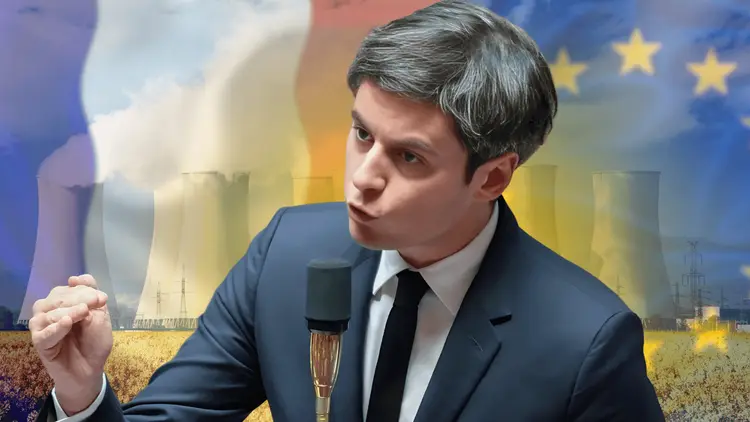
France's ongoing clash with the European Commission over renewable energy targets has reached a critical juncture. France has chosen to prioritize nuclear power as a cornerstone of its energy policy, contrasting sharply with the EU's push for increased renewable energy sources.

In 2009, the European Union set an ambitious target for France to derive 23% of its final energy consumption from renewable sources by 2020. Despite significant efforts, France failed to meet this goal, drawing criticism from Brussels. The tension has only grown as France continues to prioritize its nuclear energy strategy.

France's energy transition plan, known as Pniec, outlines the nation's goals and strategies for future energy development. However, it has been met with skepticism from the European Commission. France aimed to achieve a 23% renewable energy share by 2020 but fell short. This failure prompted calls for a reassessment of France's energy policies and greater alignment with EU objectives.

In its updated plan, France set a target of 33% renewable energy by 2030, still below the 44% mandated by a 2018 European directive. This discrepancy underscores the ongoing rift between national and EU-level energy strategies. France's energy policy emphasizes decarbonization, with nuclear power playing a pivotal role. This strategy aims to reduce greenhouse gas emissions while maintaining energy security.

France's heavy investment in nuclear power is a defining feature of its energy strategy. With a low carbon footprint, nuclear energy is seen as a vital component of France's decarbonization efforts. Decarbonized energy refers to energy sources that produce minimal greenhouse gas emissions. France includes nuclear power in this category, arguing that it contributes significantly to reducing carbon emissions. Under the updated plan, France aims to achieve a 58% share of decarbonized energy in its final consumption by 2030. This includes both renewable energy sources and nuclear power, reflecting France's broader approach to achieving climate objectives.

Despite its ambitious plans, France faces substantial criticism from Brussels and other stakeholders concerned about its commitment to renewable energy. The European Commission has repeatedly criticized France for its slow progress in adopting renewable energy. The recent energy transition plan was deemed insufficient, prompting further scrutiny and calls for more robust action.

France has defended its strategy, emphasizing the role of nuclear power in achieving decarbonization goals. The government argues that nuclear energy is essential for meeting climate objectives and ensuring energy security. France's stance could lead to potential sanctions from the European Commission. The directive allows for retroactive purchasing of renewable energy production volumes from other countries if targets are not met. Sanctions could include financial penalties and mandatory adjustments to France's energy policies. The possibility of sanctions underscores the high stakes involved in this ongoing dispute.

France has refused to retroactively purchase renewable energy production volumes from other countries, arguing that its decarbonization efforts, including nuclear power, should be sufficient. Nuclear power is central to France's energy strategy, providing a reliable and low-carbon energy source that supports the nation's decarbonization goals. Nuclear power's low greenhouse gas emissions make it a key component of France's efforts to reduce its carbon footprint. This aligns with broader climate objectives while ensuring energy security.

Nuclear energy offers significant environmental benefits, including reduced carbon emissions. Economically, it provides stable and predictable energy costs, supporting national energy security. The debate between nuclear power and renewable energy is complex, with both sides presenting compelling arguments. Nuclear power offers reliability and low emissions but comes with concerns about safety, waste management, and high initial costs. These factors must be weighed against its environmental benefits.

Renewable energy sources like wind and solar are crucial for a sustainable future but face challenges such as intermittency and higher upfront investment. Balancing these with nuclear power is a key policy challenge. France is advocating for a broader acceptance of nuclear power within European energy policies, proposing a shift from renewable targets to decarbonization targets. France is urging other EU member states to adopt similar decarbonization strategies, emphasizing the role of nuclear power in achieving climate goals.

If France's proposal gains traction, it could lead to significant changes in European energy policy, potentially redefining the balance between renewable and nuclear energy. Reactions to France's energy strategy have been mixed, with both domestic and international stakeholders weighing in. Within France, there is considerable support for the nuclear energy strategy, reflecting national priorities for energy security and environmental sustainability. Other EU member states have shown varying levels of support and opposition, reflecting differing national priorities and energy strategies.

France's energy strategy includes several upcoming consultations and strategic documents that will shape its future energy policies. Key strategic documents include the Multiannual Energy Program (PPE), the National Low-Carbon Strategy (SNBC-3), and the National Climate Change Adaptation Plan (PNACC-3). The PPE outlines France's energy policy priorities and goals, providing a roadmap for future energy development. The SNBC-3 focuses on reducing carbon emissions and achieving climate objectives, incorporating both renewable energy and nuclear power. The PNACC-3 addresses strategies for adapting to climate change, ensuring resilience and sustainability in the face of environmental challenges.

The timetable for public consultations and political negotiations will shape the final versions of these strategic documents. The consultation process will involve input from various stakeholders, including industry experts, environmental groups, and the general public. This inclusive approach aims to balance diverse perspectives and achieve broad consensus on France's energy future. The challenge of balancing different decarbonized energy sources within the EU is significant. France's nuclear strategy highlights the complexities involved in achieving common climate objectives while respecting national priorities. The discussion on including nuclear power in decarbonization targets could redefine future European energy policies. This shift could lead to a more flexible and diversified approach to meeting climate goals. The long-term implications of France's stance on nuclear power will depend on the outcome of ongoing consultations and negotiations. A broader acceptance of nuclear energy could pave the way for a more balanced and resilient European energy landscape.

France's defense of nuclear power and rejection of stringent EU renewable targets reflect its unique energy strategy and national priorities. By emphasizing decarbonization through nuclear energy, France aims to meet its climate objectives while ensuring energy security. The ongoing debate within the EU highlights the challenges of balancing diverse energy sources and achieving common climate goals. As consultations and negotiations continue, the future of European energy policy remains uncertain but full of potential for innovation and collaboration.

Most Popular News

  1. SpaceX’s $8B Spectrum Deal Sends AT&T, Verizon, and T-Mobile Plummeting
  2. Is Project Vault Securing America’s Supply Chain or Squeezing It to the Breaking Point?
  3. Why Gautam Lohia Shifted from Global Consulting to Reboot a $20M Tech Micro-Cap
  4. Everyday Luxury, Unstoppable Scale: Aritzia Delivers 44% Net Revenue Growth
  5. Can Navy SEAL Leadership and Big Tech Scale Revolutionize Airborne Threat Detection?

Disclaimer


This report should not be viewed as investment advice or as an offer to buy or sell any securities or as an invitation or solicitation of an offer to buy or sell any securities. Neither the author of this report, its publisher, nor any other person associated with the publication of this report, are registered brokers, investment dealers, investment advisers, or financial advisers. The information in this report has not been tailored to the particular needs or circumstances of readers and should not be relied upon as investment advice or recommendations to purchase or sell any of the securities presented in this report. Readers seeking investment advice should contact qualified and registered brokers, investment dealers, investment advisers, or financial advisers prior to making any decision to buy or sell any of the securities referred to in this report. The information in this report should not be construed as investment, legal, or tax advice. No recommendation is made as to whether an investment in the presented securities is suitable for any reader in light of the reader’s particular circumstances.

Readers are cautioned that the publisher of this report covers exclusively securities that carry a high degree of volatility. Investing in such securities is highly speculative and carries a high degree of risk. Investors in such securities could lose all or a substantial portion of their investment. Only those investors who can afford to lose all or a substantial portion of their investment should consider investing in the securities referred to in this report.

This report may include information obtained from publicly available sources, including third-party reports or analysis. Neither the author nor publisher of this report, nor www.juniorstocks.com or its owners, have undertaken any independent investigation into the factual information used in this report, and the information in this report is provided without any warranty of any kind. No representations or warranties are provided regarding the accuracy or completeness of the information provided in this report. Statements of opinion or belief are those of the authors and/or publisher of this report. These statements of opinion or belief are expressions of the author’s and/or publisher’s judgment, and there is no guarantee that those judgments will turn out to be correct. No inference should be drawn that the author and/or publisher have any special or greater knowledge about the presented companies or their securities, or any particular expertise in the industries or markets in which the company operates. Readers should conduct their own due diligence and seek professional advice prior to investing in any securities presented on Juniorstocks.com.

Certain statements in this report constitute “forward-looking” statements. Forward-looking statements often, but not always, are identified by the use of words such as “seek,” “anticipate,” “believe,” “plan,” “estimate,” “expect,” “targeting,” and “intend” and statements that an event or result “may,” “will,” “should,” “could,” or “might” occur or be achieved and other similar expressions. Forward-looking statements express or involve discussions with respect to predictions, expectations, beliefs, plans, projections, objectives, goals, assumptions, or future events or performance; they are not statements of historical facts and should not be viewed as any guarantee of any future result. Forward-looking statements are based on expectations, estimates, and projections at the time the statements are made that involve a number of risks and uncertainties which could cause actual results or events to differ materially from those presently anticipated. The author and/or publisher of this report disclaims any obligation to update the forward-looking statements in this report, whether as a result of new information, future events, or results or otherwise. There is no assurance that forward-looking statements will prove to be accurate, as actual results and future events could differ materially from those anticipated in such statements. Accordingly, readers should not place undue reliance on forward-looking statements.

The information provided in this report is not intended for distribution to, or use by, any person or entity in any jurisdiction or country where such distribution or use would be contrary to applicable law or regulation, or would subject the author or publisher of this report to any registration requirement in such jurisdiction or country.

Information about the editor of this publication:
Juniorstocks.com is a service provided by Piccadilly Capital Group, Office 66, 101 Clapham High Street, London, SW4 7TB, UK. Piccadilly Capital Group is not the publisher of this report and was not paid for the publication of this report. Piccadilly Capital Group seeks to generate web traffic and a growing number of followers through the publication of articles or reports. Directors, officers, and other insiders of the publisher own an interest in Piccadilly Capital Group. Piccadilly Capital Group does not endorse or recommend the business, products, services, or securities of any company mentioned on www.juniorstocks.com. Piccadilly Capital Group will not share your information with any outside third parties. Due to the new data protection basic regulation, we ask you to read our data protection declaration carefully.

Note on copyright:
The contents published on this website and on connected media (e.g., e-mail, X, Facebook) are subject to applicable copyright and ancillary copyright laws. Any use not permitted by applicable copyright and ancillary copyright laws requires the prior written consent of the provider or the respective rights holder. In particular, this applies to the duplication, editing, translation, storage, processing, or reproduction of content in databases or other electronic media and systems. Contents and rights of third parties are marked as such. Unauthorized reproduction or transmission of individual contents or complete pages is not permitted and is punishable by law. Only the production of copies and downloads for personal, private, and non-commercial use is permitted. Links to the provider's website are always welcome and do not require the consent of the provider of the website. Photos and images on the website may not be shared unless the publisher itself has acquired the initial rights from authorized sources. The presentation of this website in external frames is only allowed with written permission. If you notice any violations, please inform us. Please note: The content of our articles, emails, or other publications or social networks such as X, LinkedIn or Facebook is exclusively intended for the designated addressee(s). If you are not the addressee of these articles, emails, or other publications in the market letter or social networks such as Twitter or Facebook or his or her legal representative, please note that any form of publication, reproduction, or distribution of the content of these articles, emails, or other publications in the market letter or social networks such as X, LinkedIn or Facebook is prohibited. Falsifications of the original content of this message during data transmission cannot be excluded in principle.