
EU gas companies prepare pipelines for hydrogen highway
Italian is at the forefront of the effort
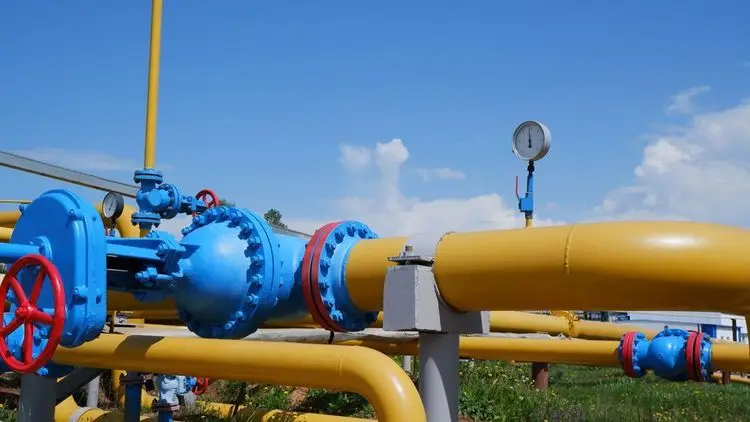
While the heads of state and government were negotiating an agreement to slow down climate change last week, gas engineer Michele Ricciardi was grappling with a practical problem: How can thousands of kilometers of pipelines in Italy and Europe be safely supplied with hydrogen?
The Italian is at the forefront of gas utilities' efforts to prepare for a lower carbon future: if fossil fuels are phased out in the coming decades, the natural gas companies don't think the infrastructure that transports them will have to go too. They want to repurpose the pipelines for the transport of emission-free hydrogen when the countries wean themselves from natural gas.
The efforts of nearly two dozen companies reflect the increasing pace of planning in the global oil and gas industry, from drillers to refineries, eager to adapt as governments and activists increase pressures to reduce greenhouse gases. In addition to the practical preparations, the changeover puts companies in competition with other energy sources for finance, even if they invest billions of euros in markets they cannot foresee.
The hydrogen project, in which the Italian Snam SpA, the Spanish Enagas S.A. and the German Open Grid Europe (OGE) would rely on huge solar parks in the Sahara desert to generate the energy needed to produce hydrogen from water.
This fuel would then be routed through the existing network of natural gas pipelines into Europe's industrial heartland - a 198,500 km network that, if untangled, could circling the equator four times.
"Once we have the Sahara sun in German factories ... it's like the Roman roads we still walk on today," Ricciardi's boss Marco Alvera, managing director of Snam, told Reuters. "It's forever."
The companies want to create a European Hydrogen Backbone (EHB) to prevent the pipelines from rusting to what the industry calls "stranded assets". According to their calculations, about 69% of the existing pipelines can be upgraded for up to 81 billion euros (94 billion dollars).
The project is one of hundreds of plans to build a hydrogen economy that, according to the European Union, could require investments of up to 460 billion euros by 2030.
A hydrogen supply network could increase Europe's energy security: the EU currently covers 28% of its energy needs with natural gas, with a third of the gas coming from Russia. Politicians recently accused Moscow of holding back supplies as gas prices rose to record levels. Russia says it has fulfilled all of its treaty obligations.
"I think it's a brilliant idea," said Frans Timmermans, EU climate commissioner, to Reuters. Adapting existing natural gas networks to transport hydrogen would cost about 25% of the cost of building a new renewable energy infrastructure, he said.
However, the European Union does not provide any money for the project - it has to come from industry or national governments. So it will need political and industrial support.
To be successful, gas grids must be able to deliver hydrogen mixed with natural gas to customers who can use it - such as steelmakers, chemical companies, and refineries. The supply must be secure and in sufficient quantities to be affordable.
If green hydrogen can be made available in large quantities, it may also be used by the automotive industry and heating manufacturers. According to studies, this would not be the case before 2030.
The gas network operators say their biggest challenge at the moment is the fact that there is no legal framework in Europe to adapt the network. "The regulation must define hydrogen as a gas that can be transported and used in a similar way to natural gas," said Maria Sicilia, Enagas' director of strategy. If the regulation sets standards, the networks can be linked, she said.
VOLATILITY Hydrogen is the most abundant element in the universe and mostly occurs in connection with oxygen in water. But it is also one of the most easily flammable elements. In the past, dozens of hydrogen airships that exploded or burned, including the 1937 Hindenburg fire, convinced many that hydrogen was highly risky.
Snam and other companies point out that their industry has decades of experience as they first built the infrastructure so hydrogen doesn't have to be more dangerous than other fuels in use today. When hydrogen escapes into the open, it rises and its concentration quickly falls below the explosion limit, according to Zukunft Gas, a German gas lobby.
From his office near the critical gas flow area of the Snam headquarters in Milan, Ricciardi and his team have been combed through Europe's largest gas transport network piece by piece over the past three years to make sure it can handle the gas. Snam has stated that it is ready to spend more than 3 billion euros on replacing gas pipes that are compatible with hydrogen.
"We have been transporting natural gas for 80 years," says Ricciardi, whose job it is to set standards that the industry can agree on in order to make the pipelines safe. "Now we have to do it with hydrogen too".
Flammability is just a problem. Compared to natural gas, hydrogen escapes more easily because its molecules are smaller. Its flow patterns are different and it even attacks some types of steel and makes them brittle.
The changes required will vary depending on the gas network, but companies need to carefully examine the pipes to make sure the steel is intact and the seals are airtight. The compressor stations along the route may need to be adjusted and the systems fitted with sensors to detect leaks and then vent and redirect them.
The petroleum and other industries already use hydrogen as a raw material - Germany's supplies correspond to around a tenth of its electricity consumption, mainly in the steel and chemical industries. However, this gas is made from fossil fuels and is known as "gray" hydrogen.
The pipeline network already comprises four lines connecting Algeria, Morocco, Libya and Tunisia with Spain and Italy.
"The problem now, of course, is that it is filled with natural gas," says Ad van Wijk, Professor of Future Energy Systems at Delft University of Technology. But "the basic framework is already in place," he said. He advocates connecting Europe and Africa in order to operate the European energy system with 50% renewable energies and 50% green hydrogen.
Another problem is cost. So far, green "hydrogen has mainly been produced for experimental projects. It costs four to five times more to produce than the gray variant.
To reduce these costs, industry and consumers must increase production and demand.
According to Alvera von Snam, solar panels in southern Spain, the Sahara and parts of the Middle East can provide cheap renewable electricity for electrolysis plants that pump hydrogen into the reused pipes. According to the industry association Solar Power Europe, Spain is already one of the cheapest locations in Europe for generating electricity from renewable energies, and costs are expected to continue to fall.
The companies claim they can also move gas that is made from fossil fuels, but which captures the emissions - called "blue" hydrogen.
Thomas Deser, a senior portfolio manager at the large German fund Union Investment, is skeptical. He believes that "there will be no money to be made producing green hydrogen without subsidies before the middle of the decade."
RIVAL CLAIMS The hydrogen backbone is now competing for government funding. Germany is the largest energy consumer in Europe. Berlin has pledged nine billion euros to build a green hydrogen industry by 2030, two billion of which are earmarked for the promotion of imports from partner countries such as Morocco, Chile, Saudi Arabia and Australia.
But electricity is also a rapidly growing source of relatively clean electricity, and Germany’s electricity transmission network is also in increasing demand. Germany plans to spend one billion euros on charging infrastructure for electric vehicles by 2025 and another hundreds of millions on purchase bonuses and tax breaks.
The country is the seat of the world's largest automobile manufacturer, Volkswagen AG, based in Wolfsburg. While the car companies are developing hydrogen fuel cell prototypes in addition to battery cars, European car manufacturers do not see hydrogen as the first choice for their drive.
VW has already invested billions of euros in battery-powered electric vehicle technology. The company told the Reuters news agency that it was of the opinion that the change in the energy supply for mobility must take place in large quantities. Herbert Diess, CEO of VW, tweeted in May that "the hydrogen car is demonstrably NOT the climate-friendly solution" and said, "electrification has prevailed in traffic".
Nonetheless, there is a new demand for hydrogen: 359 major projects were announced worldwide by July 2021, according to the Hydrogen Council and the management consultancy McKinsey, which states that 80% of the new initiatives are based in Europe.
According to Snam, he successfully tested a mixture of natural gas and 30% hydrogen to fire furnaces in an Italian steel company.
In Milan, Ricciardi says that increasing mixing rates is difficult, which is why standards are crucial.
"We are working on the new set of rules to ensure that the network is up to the task," said Ricciardi. "A lot depends on it."