SPONSORED

China fines Jack Ma´s Alibaba with a record sum

The chinese online giant will have to pay 2.75 billion dollars.
•• 3 Min
China fines Jack Ma´s Alibaba with a record sum

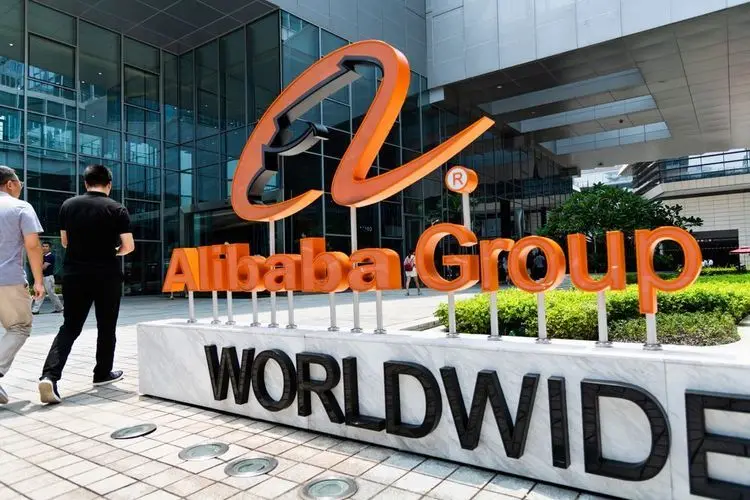
Last year, massive cracks emerged in Jack Ma's sprawling internet and cellphone empire after Chinese authorities canceled the Ant Group's highly anticipated $ 37 billion initial public offering. Jack Ma is the founder and former CEO of Alibaba Group Holding Ltd. (NYSE: BABA), which formerly owned the Ant Group when it was known as Ant Financial and Alipay. The supervisory authorities justified the rejection, among other things, with changes in the regulatory environment for fintechs. Most investors didn't believe it, however, and expected Alibaba to pay a price, especially after Ma's outburst of criticism of the way China's state banks operate. As it turns out, they were right: Chinese regulators have just fined Alibaba $ 2.75 billion for antitrust violations - a record for a Chinese company. Beijing has charged Alibaba with antimonopoly violations for abusing its dominant market position. The state agency for market regulation (SAMR) has stated that Alibaba has abused its market dominance since 2015 by banning its merchants from using other online e-commerce platforms. Most of Alibaba's problems, however, appear to stem from its financial arm. Over the past decade, Ant Group has grown into a one-stop shop for everything from online payments and financial investments to offering loans and a variety of other financial services, becoming the most powerful fintech in the world with over 700 million monthly users . Jack Ma founded Alipay, a subsidiary of Ant Financial, in 2004 to provide Chinese customers who did not have credit and debit cards with an easy way to shop on the vast online marketplace. The platform has grown steadily and today has 1.3 billion users. Ant Financial's dual listing on the Hong Kong and Shanghai stock exchanges was expected to raise at least $ 35 billion. As Alipay grew, Jack Ma discovered that the banks were not doing nearly enough to support small businesses and began promoting them with small loans. In 2010, Alipay was spun off from Alibaba after authorities stated that the platform needed a new license to operate. Until 2013, Alipay held billions of dollars worth of customer funds in escrow. It was around this time that the company came up with the idea of ​​investing unused customer funds in money market funds in order to generate an income. The money market fund, known as Yu'e Bao for "leftover treasure," allows customers to invest from as little as 0.01 yuan ($ 0.0015). The fund pays interest rates several points higher than what banks pay on short-term deposits, which is possible because its status allows it to invest in riskier products than banks allow. A boom in asset-backed securities issued by micro-lenders who package consumer credit into securities has fueled the company's growth. China's banks, including the country's largest, are not happy with this development and have complained that Ant is siphoning off their deposits, forcing them to pay higher interest rates to attract deposits, and even leading to the closure of branches and ATMs. A state television station described Ant's massive money market fund as a "vampire sucking the blood out of banks". Beijing grew suspicious and looked for ways to put Ant in his place. Two years ago, the Central Bank of China thwarted Ant's longstanding efforts to set up a national credit scoring system by banning banks and credit institutions from using it, even though a private system was developed. Unlike the US, there is no national credit scoring system in China. Chinese regulators have ordered Ant Group to apply as a financial holding company, which would place it under the supervision of the central bank. In addition, Ant must put an end to the competition in payment transactions, which the regulatory authorities perceive as unfair, and improve its corporate governance. Interestingly, the BABA share has soared after the fine and has gained almost 10% since the judgment. HSBC says the rally was due to Alibaba's Sword of Damocles "being lifted as regulatory risks have already been priced in and antitrust concerns largely resolved.

ChinaJack MaAlibaba

Most Popular News

  1. SpaceX’s $8B Spectrum Deal Sends AT&T, Verizon, and T-Mobile Plummeting
  2. Is Project Vault Securing America’s Supply Chain or Squeezing It to the Breaking Point?
  3. Why Gautam Lohia Shifted from Global Consulting to Reboot a $20M Tech Micro-Cap
  4. Everyday Luxury, Unstoppable Scale: Aritzia Delivers 44% Net Revenue Growth
  5. Can Navy SEAL Leadership and Big Tech Scale Revolutionize Airborne Threat Detection?

Disclaimer


This report should not be viewed as investment advice or as an offer to buy or sell any securities or as an invitation or solicitation of an offer to buy or sell any securities. Neither the author of this report, its publisher, nor any other person associated with the publication of this report, are registered brokers, investment dealers, investment advisers, or financial advisers. The information in this report has not been tailored to the particular needs or circumstances of readers and should not be relied upon as investment advice or recommendations to purchase or sell any of the securities presented in this report. Readers seeking investment advice should contact qualified and registered brokers, investment dealers, investment advisers, or financial advisers prior to making any decision to buy or sell any of the securities referred to in this report. The information in this report should not be construed as investment, legal, or tax advice. No recommendation is made as to whether an investment in the presented securities is suitable for any reader in light of the reader’s particular circumstances.

Readers are cautioned that the publisher of this report covers exclusively securities that carry a high degree of volatility. Investing in such securities is highly speculative and carries a high degree of risk. Investors in such securities could lose all or a substantial portion of their investment. Only those investors who can afford to lose all or a substantial portion of their investment should consider investing in the securities referred to in this report.

This report may include information obtained from publicly available sources, including third-party reports or analysis. Neither the author nor publisher of this report, nor www.juniorstocks.com or its owners, have undertaken any independent investigation into the factual information used in this report, and the information in this report is provided without any warranty of any kind. No representations or warranties are provided regarding the accuracy or completeness of the information provided in this report. Statements of opinion or belief are those of the authors and/or publisher of this report. These statements of opinion or belief are expressions of the author’s and/or publisher’s judgment, and there is no guarantee that those judgments will turn out to be correct. No inference should be drawn that the author and/or publisher have any special or greater knowledge about the presented companies or their securities, or any particular expertise in the industries or markets in which the company operates. Readers should conduct their own due diligence and seek professional advice prior to investing in any securities presented on Juniorstocks.com.

Certain statements in this report constitute “forward-looking” statements. Forward-looking statements often, but not always, are identified by the use of words such as “seek,” “anticipate,” “believe,” “plan,” “estimate,” “expect,” “targeting,” and “intend” and statements that an event or result “may,” “will,” “should,” “could,” or “might” occur or be achieved and other similar expressions. Forward-looking statements express or involve discussions with respect to predictions, expectations, beliefs, plans, projections, objectives, goals, assumptions, or future events or performance; they are not statements of historical facts and should not be viewed as any guarantee of any future result. Forward-looking statements are based on expectations, estimates, and projections at the time the statements are made that involve a number of risks and uncertainties which could cause actual results or events to differ materially from those presently anticipated. The author and/or publisher of this report disclaims any obligation to update the forward-looking statements in this report, whether as a result of new information, future events, or results or otherwise. There is no assurance that forward-looking statements will prove to be accurate, as actual results and future events could differ materially from those anticipated in such statements. Accordingly, readers should not place undue reliance on forward-looking statements.

The information provided in this report is not intended for distribution to, or use by, any person or entity in any jurisdiction or country where such distribution or use would be contrary to applicable law or regulation, or would subject the author or publisher of this report to any registration requirement in such jurisdiction or country.

Information about the editor of this publication:
Juniorstocks.com is a service provided by Piccadilly Capital Group, Office 66, 101 Clapham High Street, London, SW4 7TB, UK. Piccadilly Capital Group is not the publisher of this report and was not paid for the publication of this report. Piccadilly Capital Group seeks to generate web traffic and a growing number of followers through the publication of articles or reports. Directors, officers, and other insiders of the publisher own an interest in Piccadilly Capital Group. Piccadilly Capital Group does not endorse or recommend the business, products, services, or securities of any company mentioned on www.juniorstocks.com. Piccadilly Capital Group will not share your information with any outside third parties. Due to the new data protection basic regulation, we ask you to read our data protection declaration carefully.

Note on copyright:
The contents published on this website and on connected media (e.g., e-mail, X, Facebook) are subject to applicable copyright and ancillary copyright laws. Any use not permitted by applicable copyright and ancillary copyright laws requires the prior written consent of the provider or the respective rights holder. In particular, this applies to the duplication, editing, translation, storage, processing, or reproduction of content in databases or other electronic media and systems. Contents and rights of third parties are marked as such. Unauthorized reproduction or transmission of individual contents or complete pages is not permitted and is punishable by law. Only the production of copies and downloads for personal, private, and non-commercial use is permitted. Links to the provider's website are always welcome and do not require the consent of the provider of the website. Photos and images on the website may not be shared unless the publisher itself has acquired the initial rights from authorized sources. The presentation of this website in external frames is only allowed with written permission. If you notice any violations, please inform us. Please note: The content of our articles, emails, or other publications or social networks such as X, LinkedIn or Facebook is exclusively intended for the designated addressee(s). If you are not the addressee of these articles, emails, or other publications in the market letter or social networks such as Twitter or Facebook or his or her legal representative, please note that any form of publication, reproduction, or distribution of the content of these articles, emails, or other publications in the market letter or social networks such as X, LinkedIn or Facebook is prohibited. Falsifications of the original content of this message during data transmission cannot be excluded in principle.